House Blend Coffee Guide: What It Is, How It Tastes and How to Brew It
A house blend is the coffee a roaster builds to taste the same, and taste good, every single day. Ours is a medium roast of 100% arabica with notes of milk chocolate, hazelnut and caramel. Brew it at 1:16 in a drip machine with water at 200 to 205°F, or pull it as espresso at 18 grams in and 36 grams out.
This guide covers what a house blend is, how it differs from single origin coffee, how ours tastes and how we roast it, a recipe for every brewer, how to fix a cup that tastes off, what to eat with it, and why roasters blend in the first place.
What is a house blend coffee?
A house blend is a roaster's everyday coffee: two or more coffees combined to hit one target flavor, bag after bag. The name comes from restaurants and cafes, where the "house" coffee is the one poured when a guest just asks for coffee.
That makes it the hardest working coffee a roaster sells. It has to taste good black and with cream, in a home drip machine and in a 1.5 gallon batch brewer, on the first cup and the third. A house blend is not the leftover coffee. It is the one that carries the roaster's name with the most people.
Ours is built around milk chocolate, hazelnut and caramel, a cup that works black or with cream.

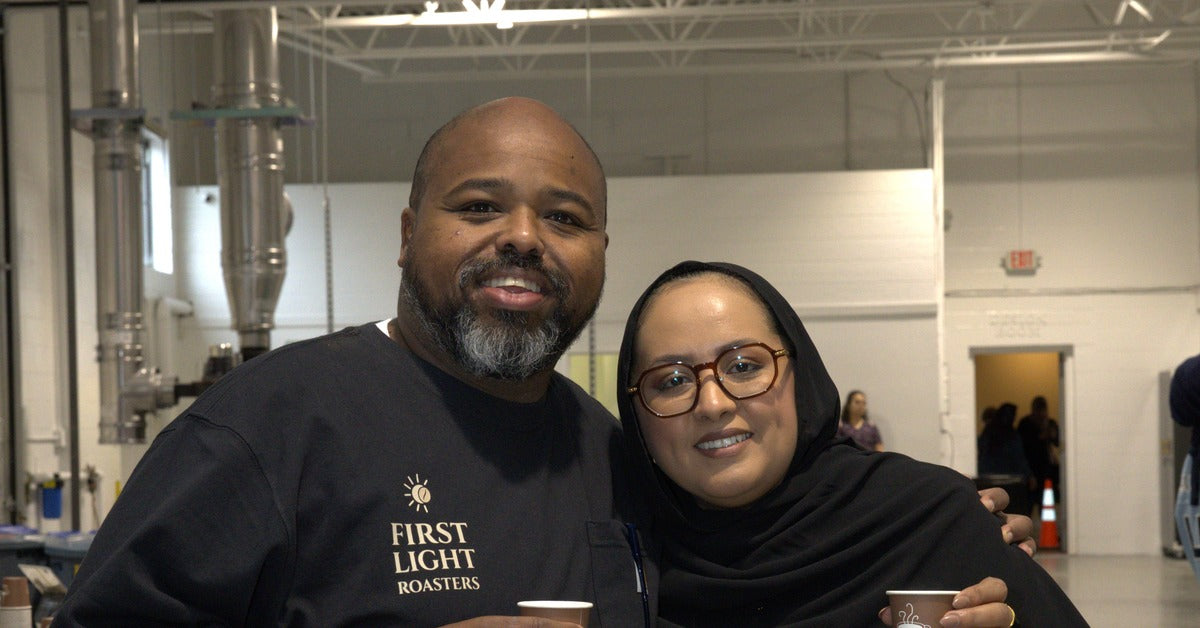
Sam and Amal on the roastery floor in Livonia, each with a small cup in hand. The silver ducts behind Sam carry the exhaust from the roaster.
This coffee at a glance
| Style | Signature blend, 100% arabica |
|---|---|
| Roast | Medium |
| Tasting notes | Milk chocolate, hazelnut, caramel |
| Best as | Drip, espresso, lattes, cappuccinos |
| Sizes | 12 oz, 2 lb and 5 lb, whole bean or ground |
| Roasted | To order in Livonia, Michigan. Ships within 48 hours of roast. |
House blend vs single origin: what is the difference?
A single origin coffee comes from one place: one country, one region, sometimes one farm or washing station. A blend combines coffees from more than one place. Neither is the better coffee. They are built for different jobs.
| House blend | Single origin | |
|---|---|---|
| Goal | The same balanced cup all year | Show what one place tastes like |
| Flavor | Round and familiar: chocolate, nuts, caramel | Distinct: fruit, flowers, citrus, spice |
| Changes over the year | Very little. The roaster adjusts to hold the taste. | Yes. Each harvest and lot tastes a little different. |
| Milk and sugar | Made to take them | Often best black |
| Best for | The daily pot, a shared kitchen, an office, guests | A slow weekend pour-over, tasting side by side |
A simple way to use both: keep House Blend as the coffee you never have to think about, and keep one single origin next to it for the mornings you want something different. Our Kenya and Ethiopia guides are good places to start.
What does our House Blend taste like?
Milk chocolate first, hazelnut through the middle, and a caramel finish. The body is medium to full, the acidity is soft, and there is nothing sharp or smoky in the cup.
Three things you will notice:
- It is sweet without sugar. A medium roast keeps the sugars the roast has caramelized and stops before they turn bitter.
- It holds up in milk. Chocolate and nut flavors come through cream and steamed milk. Bright, fruity coffees tend to get lost there.
- It stays good as it cools. A balanced cup does not turn sour or harsh on the way to room temperature, which matters if you drink a mug over an hour at your desk.
How do we roast it?
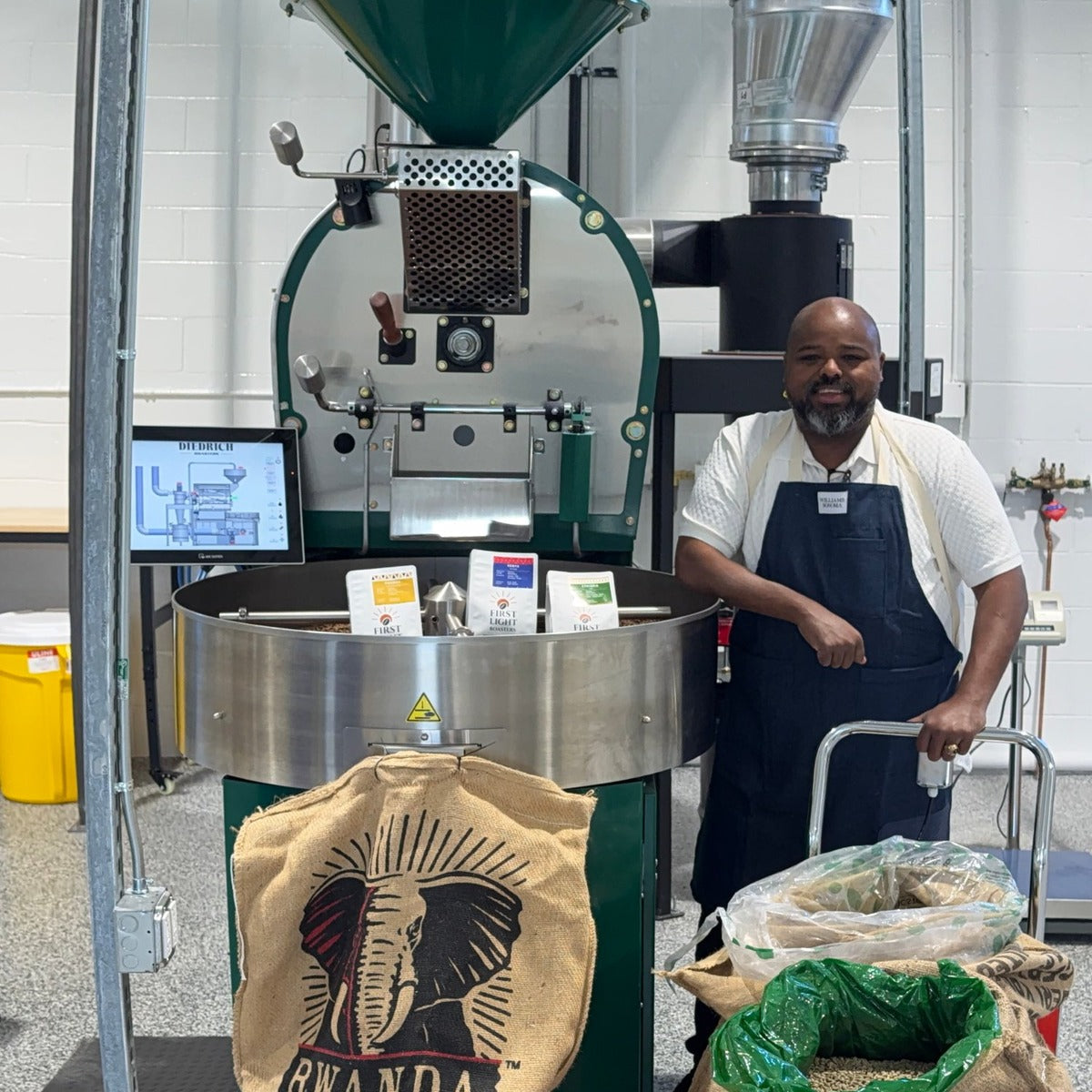
We roast in Livonia, Michigan on a Diedrich drum roaster, and we take House Blend to medium. That is far enough to turn the coffee's sugars into caramel and milk chocolate, and short of the point where the surface turns oily and the cup tastes of the roast more than the coffee.
Medium is also the reason this blend works across brewers. Lighter roasts can taste sour in a basic drip machine that does not get hot enough. Darker roasts can taste bitter in a French press. A medium roast forgives both.
Every bag is roasted to order and ships within 48 hours of roast, with the roast date on the bag. For drip and French press it is ready about four or five days after roast. For espresso, give it a week to ten days so the shots settle.
How do you brew House Blend?
Start with filtered water, a scale and a 1:16 ratio: 1 gram of coffee to 16 grams of water. For a medium roast, use water at 200 to 205°F, which is 30 to 60 seconds off the boil. No scale yet? Two level tablespoons of ground coffee is roughly 10 grams, so use two tablespoons for every 6 ounces of water and adjust from there.

Four starting recipes for House Blend. Save it, then adjust the grind by taste.
| Method | Coffee | Water | Grind | Temp | Time |
|---|---|---|---|---|---|
| Drip machine (full pot) | 60 g | 1,000 g (1 liter) | Medium, like coarse sand | Machine set | 4 to 6 min |
| Pour-over (V60, Kalita) | 20 g | 320 g | Medium-fine, like table salt | 205°F | 2:45 to 3:15 |
| French press | 30 g | 450 g | Coarse, like sea salt | 200°F | 4:00 steep |
| Espresso | 18 g in | 36 g out | Fine | 200°F | 25 to 30 sec |
| Cold brew concentrate | 100 g | 800 g, cold | Extra coarse | Fridge | 12 to 16 hours |
Drip machine, step by step
Most House Blend gets brewed in a drip machine, so this is the recipe that matters most.
- Fill the tank with fresh filtered water. Do not reuse water that sat in the tank overnight.
- Rinse the paper filter with hot water. It removes the papery taste and warms the basket.
- Weigh 60 g of medium ground coffee for a full liter, or 30 g for half a pot. Level the bed with a gentle shake.
- Brew. If your machine has a "bold" or "1 to 4 cup" setting, use it for small batches. It slows the water down so a small bed of coffee still extracts fully.
- Take the pot off the hot plate when the brew ends. A hot plate keeps cooking the coffee and turns it bitter within about 20 minutes. Pour what is left into a thermal carafe or a travel mug.
Buying ground? Tell us your brew method at checkout. We grind to order with a separate setting for each method. For more on dialing in a manual brew, see our pour-over protocol. The National Coffee Association's brewing guides are a solid outside reference for each method.
Can you use House Blend for espresso?
Yes. It pulls a clean, sweet shot and holds up in lattes and cappuccinos. Start at 18 g in, 36 g out, in 25 to 30 seconds at 200°F. If the shot runs fast and tastes sour, grind finer. If it drips slowly and tastes bitter, grind coarser.
Here is the honest distinction between our two blends. House Blend is 100% arabica and built first for brewed coffee, with espresso as its second job. Signature Espresso is roasted darker, includes specialty robusta for crema and caffeine, and is built for the espresso machine first. If you drink mostly drip with an occasional latte, choose House Blend. If you pull shots every morning, choose Signature Espresso.
How do you fix a cup that tastes off?
| If the cup tastes | Likely cause | Fix |
|---|---|---|
| Weak and watery | Not enough coffee. This is the most common drip machine problem. | Weigh the coffee. Move from 1:16 to 1:15. |
| Sour, thin, a little salty | Under-extracted: grind too coarse, water not hot enough, or batch too small for the machine | Grind finer, brew a larger batch, or use the small batch setting |
| Bitter, harsh, drying | Over-extracted: grind too fine or brew too long | Grind coarser or shorten the steep |
| Burnt, stewed | Sat on the hot plate, or the machine needs cleaning | Move coffee to a thermal carafe. Descale the machine and wash the pot and basket. |
| Dull, like cardboard | Stale coffee or coffee ground long ago | Check the roast date, buy whole bean, grind right before brewing |
Change one thing at a time. Ratio first for drip, then grind, then temperature. If the coffee still tastes flat, check your water: our guide to the best water for coffee covers it.
What should you eat with it?
Chocolate, hazelnut and caramel go with almost anything on a breakfast table. Pick foods that echo those notes or play against them with fruit:
- Butter croissant. Butter and caramel are old friends.
- Fruit and cheese danish. The tart fruit wakes the cup up, and the coffee's chocolate rounds off the cream cheese.
- Banana nut bread. Toasted nuts meet the hazelnut note.
- Cinnamon roll or coffee cake. Brown sugar and cinnamon pick up the caramel finish.
- Chocolate chip cookie. The afternoon version of the same idea.
- A full breakfast. Eggs, toast, bacon, pancakes. A balanced medium roast cuts through fat and does not fight with maple syrup.

Strawberry cheese danish at Detroit Halite, the cafe in front of our roastery. The handwritten tag is ours, and you can see the strawberry filling at the cut edge.
Why do roasters blend coffee?
Coffee is a crop. It is harvested once a year in most places, at different months in different countries, and no two harvests taste exactly alike. A roaster who sells only single origins lets the menu change with the seasons. A roaster who also sells a blend makes a different promise: this one will taste the way you remember it.
Keeping that promise is real work. When a component coffee changes with a new crop, the roaster tastes the blend again and adjusts the roast or the proportions until the cup lands back on target. The recipe serves the flavor, not the other way around.
Blending also does something a single coffee often cannot. One coffee may bring body and chocolate, another sweetness, another a little brightness to keep the cup lively. Together they cover the whole range of what people mean when they say a coffee tastes "smooth."
The house coffee has a long history in American diners, hotels and restaurants, where one pot had to please every guest at the table. That is still the brief. It is why House Blend is the coffee we point hotels and offices toward when they serve by the pot, and why it is one of our bestsellers at home too. If you run a cafe, hotel or office program, our wholesale page has the details.
Frequently asked questions
What is a house blend coffee?
It is a roaster's everyday coffee: two or more coffees blended to give the same balanced flavor all year. It is usually a medium roast made to taste good black or with milk.
Is house blend a medium or dark roast?
It depends on the roaster. Most house blends are medium. Ours is a medium roast with notes of milk chocolate, hazelnut and caramel.
Is a house blend lower quality than single origin coffee?
Not when it is built from good coffee. A blend is a choice about consistency and balance, not about grade. Our House Blend is 100% arabica specialty grade coffee.
Can I use House Blend for espresso?
Yes. Start at 18 g in, 36 g out, in 25 to 30 seconds. For a heavier shot with more crema, use our Signature Espresso.
How much House Blend do I use for a pot of coffee?
Use 60 g of coffee for 1 liter of water, a 1:16 ratio. Without a scale, that is about two level tablespoons for every 6 ounces of water.
Is House Blend good for cold brew?
Yes. Steep 100 g of extra coarse coffee in 800 g of cold water for 12 to 16 hours in the fridge, strain, then dilute about 1:1 with water or milk over ice.
First Light Roasters is co-founded by Sam Noor and Amal Almaflahi. Roasted for clarity. Crafted at first light.

Leave a comment
This site is protected by hCaptcha and the hCaptcha Privacy Policy and Terms of Service apply.