Colombia Huila Coffee Guide: Taste, Brewing, Roast and Where Ours Comes From
Our Colombia is a washed coffee from the Huila department, roasted medium. It tastes like caramel, red apple and milk chocolate, with a clean, juicy finish. Brew it at 1:16 as a pour-over or in a drip machine with water around 205°F, or pour it hot over ice for one of the best iced coffees we make.
This guide covers where the coffee comes from, what Colombian coffee tastes like and why, how we roast it, a recipe for every brewer, how to fix a cup that tastes off, what to eat with it, and a short history of coffee in Colombia.
Where does this coffee come from?
Huila is a department in the southwest of Colombia, in the Andes. It is one of the names specialty roasters look for first when they buy Colombian coffee, and altitude is the reason. Importer Cafe Imports notes that the southwestern departments of Nariño, Cauca and Huila tend to have the country's higher altitude farms, and that higher farms give more complex acidity (Cafe Imports, Colombia).
Our lot is called Dulima. It comes from farms in central and southern Huila at roughly 1,500 to 2,000 meters, and we buy it as a traceable lot through an importer we trust.
Three varieties make up the lot: Caturra, Castillo and Colombia.
- Caturra is a natural mutation of Bourbon, found on a plantation in Minas Gerais, Brazil, between 1915 and 1918. It became one of the most planted varieties in Colombia (World Coffee Research, Caturra).
- Castillo and Colombia are varieties developed in Colombia to stand up to coffee leaf rust, the disease that has damaged harvests across Latin America. Castillo has Caturra in its parentage.
Colombia is also a very large part of the world's coffee. The USDA forecasts Colombian production at 13.4 million bags for 2026/27, which makes it the second largest arabica grower after Brazil (USDA Foreign Agricultural Service, Coffee: World Markets and Trade).
One more thing sets Colombia apart: it harvests twice a year. In Huila the main crop runs from about November to January, with a smaller second crop, called the mitaca or fly crop, from about May to July. For a roaster that means fresh Colombian coffee is available for more of the year than coffee from most origins.
This coffee at a glance
| Origin | Huila, Colombia (Dulima lot) |
|---|---|
| Process | Washed |
| Varieties | Caturra, Castillo, Colombia |
| Altitude | About 1,500 to 2,000 meters |
| Roast | Medium |
| Tasting notes | Caramel, red apple, milk chocolate |
| Best as | Pour-over, drip, iced |
| Sizes | 12 oz, 2 lb and 5 lb, whole bean or ground |
What does Colombian coffee taste like?
Balanced is the word, and it is earned. A good Colombian has sweetness, brightness and body in about equal measure, so no single thing sticks out. In our Colombia that reads as caramel first, a crisp red apple note in the middle, and milk chocolate underneath, with a clean, juicy finish.
That balance is why Colombian coffee is such an easy crowd pleaser. People who drink it black find enough going on to stay interested. People who add milk still taste the chocolate and caramel. The word our customers reach for most in their reviews is smooth.
It helps to place it between two of our other coffees:
- Next to our Brazil, Colombia is brighter and lighter on its feet. Brazil is chocolate and nuts with very low acidity.
- Next to our Kenya, Colombia is rounder and calmer. Kenya is fruit and brightness turned all the way up.
If Brazil is too mellow for you and Kenya is too much, Colombia is usually the answer. Curious how it stacks up against its neighbor to the south? We compared them in Peruvian vs Colombian coffee.
What does washed mean?
Washed describes what happens to the coffee cherry after it is picked. The skin and fruit are removed from the seed, the seed is fermented and rinsed clean, and only then is it dried. Because the fruit comes off early, the cup tastes of the bean itself: clean, clear and bright.
The other common method is natural processing, where the cherry dries whole with the fruit still on. That gives a heavier, sweeter, fruitier cup, like our Brazil. Colombia's wet mountain climate makes drying whole cherries difficult, which is one reason nearly all Colombian coffee is washed.

Washed green coffee at our roastery before roasting. This handful is our Ethiopia, and washed Colombian coffee looks much the same: pale, even and clean, with no dried fruit clinging to the bean.
How do we roast it?
We roast in Livonia, Michigan on a Diedrich drum roaster, and we take this coffee to medium. The reasoning is simple. Roast a Huila coffee too light and the apple note turns sharp and the cup tastes thin. Roast it too dark and you lose the apple entirely and the caramel turns to bittersweet. Medium is where the caramel is fully developed and the fruit is still there.
Every bag is roasted to order and ships within 48 hours of roast, with the roast date on the bag. For pour-over and drip it drinks well from about five days after roast. For espresso, give it a week to ten days.

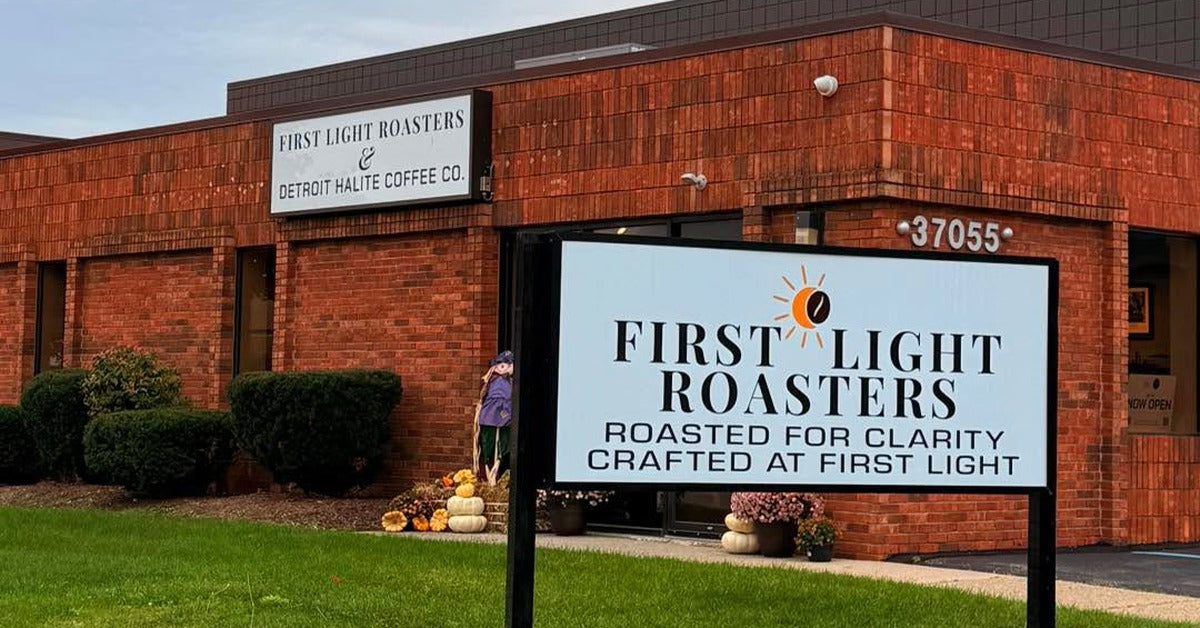
Our roastery in Livonia. The sign out front carries the line we roast by: roasted for clarity, crafted at first light.
How do you brew Colombian coffee?
Use filtered water, a scale and a 1:16 ratio (1 gram of coffee to 16 grams of water) as your starting point. This is a medium roast, so use water just off the boil, around 205°F. If your tap water is hard, read our guide to the best water for coffee first. Water matters more with a bright coffee than a dark one.

Five starting recipes for our Colombia. Save it, then adjust the grind by taste.
| Method | Coffee | Water | Grind | Temp | Time |
|---|---|---|---|---|---|
| Drip machine | 60 g | 1,000 g (1 liter) | Medium, like coarse sand | Machine set | 4 to 6 min |
| Pour-over (V60, Kalita, Chemex) | 20 g | 320 g | Medium-fine, like table salt | 205°F | 2:45 to 3:15 |
| French press | 30 g | 450 g | Coarse, like sea salt | 205°F | 4:00 steep |
| Iced pour-over | 20 g | 200 g hot, over 120 g ice | Medium-fine, a touch finer than hot | 205°F | 2:30 to 3:00 |
| Espresso | 18 g in | 38 g out | Fine | 200°F | 27 to 32 sec |
Pour-over, step by step
Pour-over is where the red apple note is clearest.
- Rinse the paper filter with hot water and empty the rinse water.
- Add 20 g of medium-fine coffee and start a timer.
- Pour 50 g of water to wet all the grounds. Wait 35 seconds. This is the bloom, and it lets gas escape so the water can do its work.
- Pour slowly in circles to 180 g by 1:15.
- Pour to 320 g by 2:00, then let it drain. Aim to finish between 2:45 and 3:15.
Buying ground? Tell us your brew method at checkout. We grind to order with a separate setting for each method.
How do you make it iced?
Brew it hot, straight onto ice. Put 120 g of ice in the carafe, then brew 20 g of coffee with 200 g of hot water over it. The total is still 320 g, so the ratio holds at 1:16 once the ice melts. Grind a little finer than you would for a hot pour-over, because less water is doing the extracting.
The coffee chills the instant it lands, which locks in the caramel sweetness and the apple brightness. Slow cold steeping is gentler and tends to mute exactly those notes, so for this coffee we prefer the hot-over-ice method. If you want a classic cold brew instead, our Cold Brew is ground and built for it.
How do you fix a cup that tastes off?
| If the cup tastes | Likely cause | Fix |
|---|---|---|
| Sour, sharp, thin | Under-extracted: grind too coarse, water too cool, or brew too fast | Grind finer, use water just off the boil, slow your pour |
| Bitter, drying, harsh | Over-extracted: grind too fine or brew too long | Grind coarser or shorten the brew |
| Flat, no apple or brightness | Water too hard, or coffee past its best | Try filtered water, check the roast date |
| Weak and watery | Not enough coffee | Move from 1:16 to 1:15 |
| Watery when iced | Too much ice melt or grind too coarse | Keep ice to about a third of the total, grind finer |
Change one thing at a time. Grind first, then ratio, then temperature.
What should you eat with it?
Caramel, apple and chocolate are dessert flavors already, so pairing is easy:
- Apple pie, apple fritter or cider donut. The red apple note in the cup meets the real thing. In Michigan in the fall, this is the one.
- Butter croissant. Butter softens the brightness and brings the caramel forward.
- Cheese danish or cheesecake. Tangy dairy and a bright coffee balance each other.
- Milk chocolate or a chocolate chip cookie. Echoes the base of the cup.
- Caramel flan or tres leches. Sweet, creamy desserts that a clean coffee cuts through.
- Arepa with cheese or a pandebono. The Colombian way: something warm, salty and cheesy next to the cup.
Coffee in Colombia: a short history
Coffee reached Colombia in the late 1700s, brought by Jesuit priests who came with the Spanish colonists. The first plantings were in the northeast, in Santander and Boyacá. Commercial growing and export began in the first decade of the 1800s and stayed modest until the 20th century (Cafe Imports, Colombia).
What changed it was organization. In 1927 the growers founded the Federación Nacional de Cafeteros, the national federation that still represents Colombian coffee farmers. In the 1950s the federation created Juan Valdez, the farmer with the mule, and taught the world to ask for Colombian coffee by name. Few origins have ever marketed themselves as well.
The coffee itself is still mostly grown by families on small plots on steep mountainsides, picked by hand because machines cannot work those slopes.
At home, Colombians drink tinto: a small, simple cup of black coffee, often sweetened, sold from thermoses on street corners and offered in every office and shop. It is an everyday, unfussy habit, and it suits this coffee. Colombia is the bag you can hand to anyone.
Frequently asked questions
What does Colombian coffee taste like?
Balanced and sweet. A washed Colombian from Huila tastes like caramel and chocolate with a crisp, apple-like brightness and a clean finish. Our Colombia tastes like caramel, red apple and milk chocolate.
Is Colombian coffee strong?
Colombian describes where the coffee was grown, not how strong it is. Strength comes from how much coffee you use and how dark it is roasted. Our Colombia is a medium roast, so it tastes sweet and balanced, not heavy or smoky.
Is Colombian coffee arabica?
Yes. Colombia grows arabica, and our Colombia is 100% arabica from the Huila department.
What is the best way to brew Colombian coffee?
Pour-over or a drip machine at a 1:16 ratio with water just off the boil, around 205°F. Both show the caramel sweetness and the apple brightness. It also makes a very good iced pour-over.
Is Colombian coffee good iced?
Yes. Brew it hot and strong directly over ice: 20 g of coffee, 200 g of hot water and 120 g of ice. The ice chills it at once and keeps the sweetness and brightness that slow cold steeping tends to flatten.
What makes Huila coffee different?
Huila is in the mountainous southwest of Colombia, where farms sit high. Coffee grown higher ripens more slowly and tends to carry more sweetness and a livelier, fruit-like acidity than coffee grown lower.
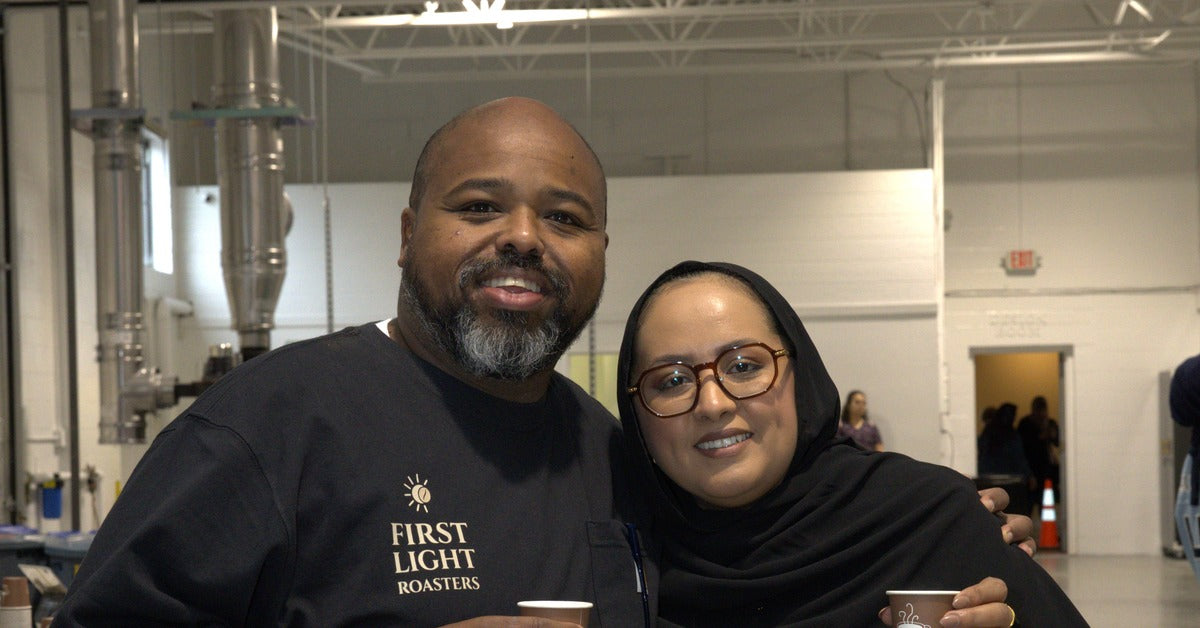
First Light Roasters is co-founded by Sam Noor and Amal Almaflahi. Roasted for clarity. Crafted at first light.

Leave a comment
This site is protected by hCaptcha and the hCaptcha Privacy Policy and Terms of Service apply.