Brazil Coffee Guide: Taste, Brewing, Roast and Why It Is So Smooth
Our Brazil is a natural process coffee from the Mogiana region, roasted medium-dark. It tastes like milk chocolate, toasted almond and caramel, with low acidity and a round, heavy body. Brew it at 1:16 in a drip machine or French press with water near 200°F, or pull it as espresso at 18 grams in and 36 grams out.
This guide covers where the coffee comes from, why Brazilian coffee tastes the way it does, how we roast it, a recipe for every brewer, how to fix a cup that tastes off, what to eat with it, and a short history of coffee in Brazil.
Where does this coffee come from?
Mogiana is one of Brazil's classic coffee regions. It runs along the border of São Paulo and Minas Gerais states, in the southeast of the country, on rolling plateaus with rich red soil. Our lots are Eagle Mogiana and Veloso, both natural process, bought as traceable lots through importers we trust.
Two things about this coffee are worth knowing before you brew it:
- The beans are big. This is a screen 17/18 coffee, which is the large end of the sizing scale. Big, even beans roast evenly, and even roasting is a large part of why the cup tastes clean.
- The varieties are Brazilian originals. The coffee is Catuai and Mundo Novo. Mundo Novo is a natural cross of Bourbon and Typica that was found in São Paulo state in the 1940s (World Coffee Research, Mundo Novo). Catuai is a cross of Mundo Novo and Yellow Caturra, bred by Brazil's Instituto Agronômico de Campinas and released in 1972 (World Coffee Research, Catuai).
Brazil is also the reason the world has enough coffee to drink. The USDA forecasts Brazil at 71.9 million bags out of a world crop of 189.7 million for 2026/27, which is nearly 40 percent of all the coffee grown on earth (USDA Foreign Agricultural Service, Coffee: World Markets and Trade).

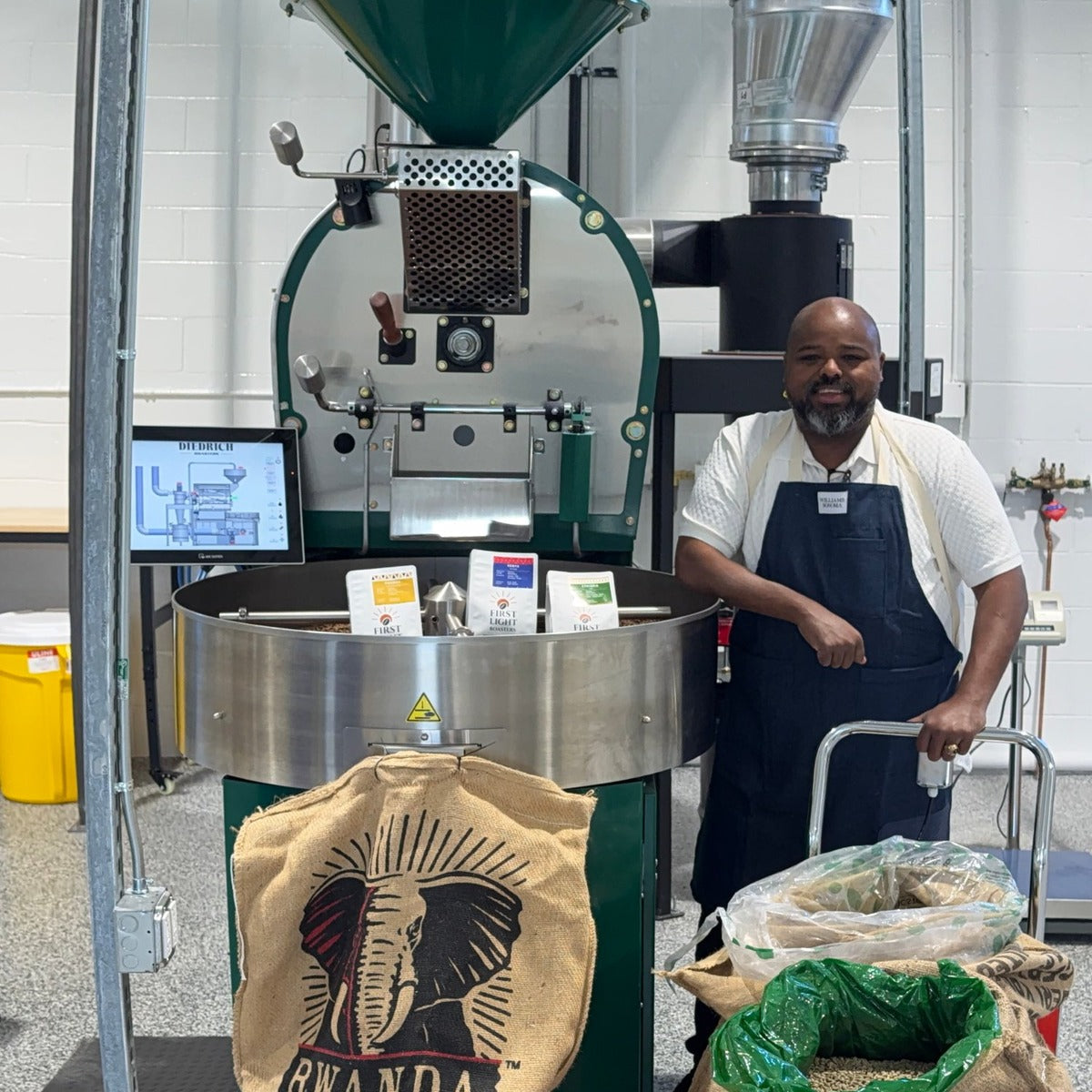
Green coffee in an open sack on our roastery floor. Before roasting, the beans are pale green and smell more like hay than coffee.
This coffee at a glance
| Origin | Mogiana, Brazil (Eagle Mogiana and Veloso) |
|---|---|
| Process | Natural (dried in the fruit) |
| Varieties | Catuai, Mundo Novo |
| Roast | Medium-dark |
| Tasting notes | Milk chocolate, toasted almond, caramel |
| Best as | Drip, French press, espresso |
| Sizes | 12 oz, 2 lb and 5 lb, whole bean or ground |
What does Brazilian coffee taste like?
Chocolate and nuts, first and always. In our Brazil that means milk chocolate up front, toasted almond in the middle and a caramel finish. The body is round and heavy, the acidity is low, and nothing in the cup is sharp.
Why does Brazilian coffee taste like chocolate and nuts? Three reasons work together:
- Natural processing. After picking, the whole coffee cherry is laid out to dry with the fruit still on the seed. Weeks of drying in the fruit build sweetness and body. Brazil's harvest falls in its dry season, which is what makes drying whole cherries practical at such scale.
- Moderate altitude. Mogiana farms sit lower than the mountain farms of Kenya or Ethiopia. Coffee grown lower tends to carry less bright acidity and more rounded sweetness.
- The varieties. Catuai and Mundo Novo lean toward sweetness and body more than toward flowers and citrus.
If you want to taste the contrast, brew this next to our Kenya. Same roast family, opposite ends of the flavor map: Brazil is chocolate and comfort, Kenya is fruit and brightness.
Is Brazilian coffee low in acidity?
Yes, among the coffees we roast it is the gentlest. In coffee, "acidity" means the bright, tart, fruit-like snap in the cup, and a natural process Brazil at a medium-dark roast has very little of it. That is why people who find other coffees sour, or who simply want a smooth cup with milk, tend to land here.
One caution. Low acidity in the flavor sense is a taste description. It is not a medical claim about your stomach. If coffee bothers you, talk to your doctor rather than a roaster.
How do we roast it?
We roast in Livonia, Michigan on a Diedrich drum roaster, and we take this coffee to medium-dark, on the darker side of that range. A natural Brazil has a lot of sugar to work with. Developing it a little further turns that sugar into the caramel and chocolate you taste, and builds the body that makes this coffee stand up to milk.
What we do not do is roast it until the surface is oily and the cup tastes of smoke. The goal is caramel, not char.
Every bag is roasted to order and ships within 48 hours of roast, with the roast date on the bag. For drip and French press it is good from about four or five days after roast. For espresso, give it a week to ten days so the shots settle down.

Sam at the roaster in Livonia. The round tray in front of him is the cooling tray, where beans are stirred and cooled the moment a roast ends.
How do you brew Brazilian coffee?
Use filtered water, a scale and a 1:16 ratio (1 gram of coffee to 16 grams of water) as your starting point. Because this is a medium-dark roast, keep the water around 200°F, about a minute off the boil. Hotter water pulls bitterness out of darker roasts.

Four starting recipes for our Brazil. Save it, then adjust the grind by taste.
| Method | Coffee | Water | Grind | Temp | Time |
|---|---|---|---|---|---|
| Drip machine | 60 g | 1,000 g (1 liter) | Medium, like coarse sand | Machine set | 4 to 6 min |
| French press | 30 g | 450 g | Coarse, like sea salt | 200°F | 4:00 steep |
| Pour-over (V60, Kalita) | 20 g | 320 g | Medium, like table salt | 200°F | 2:45 to 3:15 |
| Espresso | 18 g in | 36 g out | Fine | 200°F | 25 to 30 sec |
| Cold brew concentrate | 100 g | 800 g, cold | Extra coarse | Fridge | 12 to 16 hours |
French press, step by step
French press is where this coffee shows its body best.
- Heat water to 200°F. Rinse the press with hot water to warm it.
- Add 30 g of coarse ground coffee and start a timer.
- Pour 450 g of water, wetting all the grounds. Put the lid on with the plunger up.
- At 4:00, stir the crust gently and skim off the foam and floating grounds with a spoon.
- Press slowly and pour all of it out right away. Coffee left sitting on the grounds keeps extracting and turns bitter.
For cold brew, strain the concentrate after 12 to 16 hours and dilute it about 1:1 with water or milk over ice.
Buying ground? Tell us your brew method at checkout. We grind to order with a separate setting for each method.
Is Brazilian coffee good for espresso?
Yes. Brazil is the backbone of espresso blends around the world, because it gives a shot the things espresso needs most: body, sweetness, chocolate and low acidity. As a single origin shot, our Brazil pulls thick and sweet, like chocolate and roasted nuts, and it is forgiving to dial in.
Start at 18 g in, 36 g out, in 25 to 30 seconds. In a latte or cappuccino it tastes like chocolate milk with a caramel edge. If you want more crema and more caffeine in the cup, that is what Signature Espresso is built for.
How do you fix a cup that tastes off?
| If the cup tastes | Likely cause | Fix |
|---|---|---|
| Bitter, ashy, drying | Over-extracted: grind too fine, water too hot, or steeped too long | Grind coarser, drop the water to 195°F, or shorten the brew |
| Flat, papery, a little sour | Under-extracted: grind too coarse or brew too short | Grind finer or brew a little longer |
| Thin and watery | Not enough coffee | Move from 1:16 to 1:15 |
| Heavy and muddy | Too much coffee, or fine grounds in a French press | Move to 1:17, grind coarser, skim before pressing |
| Dull, like cardboard | Stale coffee or coffee ground long ago | Check the roast date, buy whole bean, grind right before brewing |
Change one thing at a time. Grind first, then ratio, then temperature.
What should you eat with it?
A chocolate and nut coffee is the easiest coffee in the world to pair. Go with foods that echo it or lean on its sweetness:
- Butter croissant or pain au chocolat. Butter and chocolate against a chocolate cup.
- Banana bread or banana nut muffin. Banana and toasted nuts are a natural match for the almond note.
- Almond biscotti or shortbread. Made for dunking.
- Cinnamon roll. The caramel finish picks up the brown sugar.
- Breakfast. Eggs, toast, pancakes with maple syrup. This is a morning table coffee.
- Pão de queijo. Brazilian cheese bread, the classic partner to a small coffee in Brazil.
Coffee in Brazil: a short history
Coffee is not native to Brazil. It arrived in the northern state of Pará in 1727, and the story usually told credits a Portuguese officer, Francisco de Melo Palheta, with bringing the first plants from French Guiana. From there it spread south, and within about fifty years it had reached Rio de Janeiro (Cafe Imports, Brazil).
The climate and the land suited it. Through the 1800s coffee moved into São Paulo and Minas Gerais, where regions like Mogiana grew up around it, and Brazil became the world's largest producer. It has held that position ever since.
Brazil also drinks its own coffee, which is not true of every producing country. The everyday cup is the cafezinho: a small, strong, usually sweet coffee, offered to a guest almost as a reflex in homes, offices and shops. It is less a drink order than a way of saying welcome. That fits this coffee. It is the one you put on for company.
Frequently asked questions
What does Brazilian coffee taste like?
Chocolate, nuts and caramel, with a heavy body and low acidity. Our Brazil tastes like milk chocolate, toasted almond and caramel.
Is Brazilian coffee good for espresso?
Yes. It gives espresso body, sweetness and chocolate with very little sourness, which is why it is the base of so many espresso blends. Start at 18 g in, 36 g out, in 25 to 30 seconds.
Is Brazilian coffee low acid?
In flavor, yes. A natural process Brazil at a medium-dark roast is one of the smoothest, least tart coffees you can buy. That is a taste description, not a health claim.
Is Brazilian coffee arabica or robusta?
Brazil grows both. Most of its crop is arabica, and it also grows a large amount of robusta, known locally as conilon. Our Brazil is 100% arabica.
What is the best way to brew Brazilian coffee?
French press or a drip machine at a 1:16 ratio with water near 200°F. Both show off the body and chocolate. It also makes a sweet, low-acid cold brew.
What does natural process mean?
The coffee cherry is dried whole, with the fruit still on the seed, before the dried fruit is removed. It adds sweetness and body compared with washed coffee, where the fruit is removed before drying.
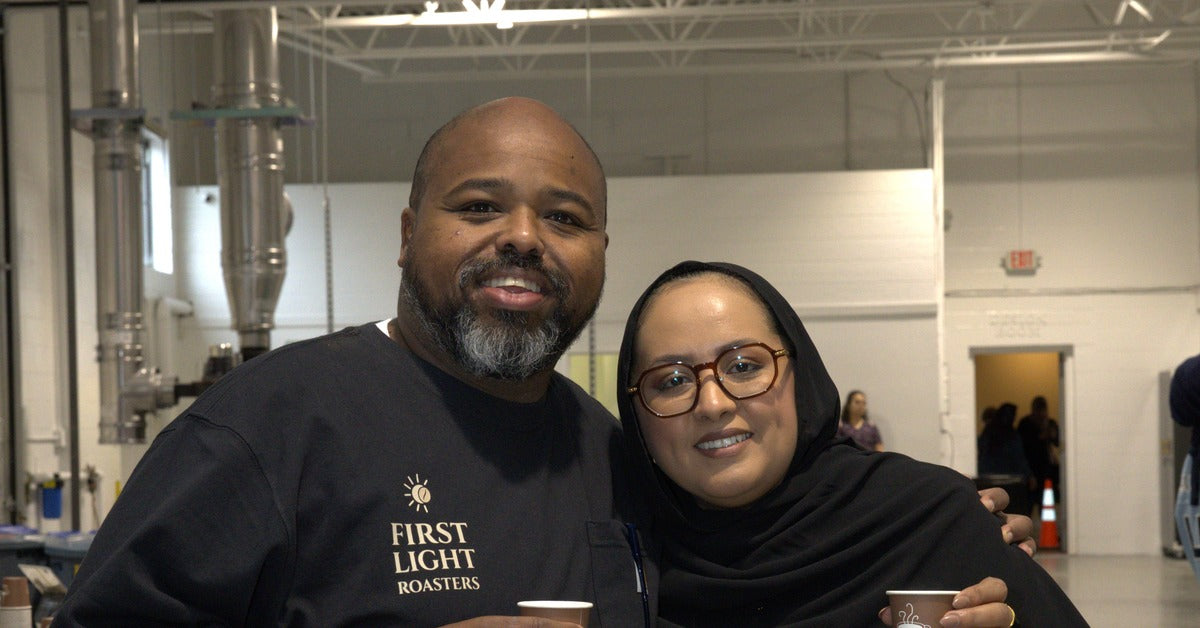
First Light Roasters is co-founded by Sam Noor and Amal Almaflahi. Roasted for clarity. Crafted at first light.

Leave a comment
This site is protected by hCaptcha and the hCaptcha Privacy Policy and Terms of Service apply.