
Ethiopia Guji: Origin, Roast, Brewing Guide, Pairings and the Coffee Ceremony
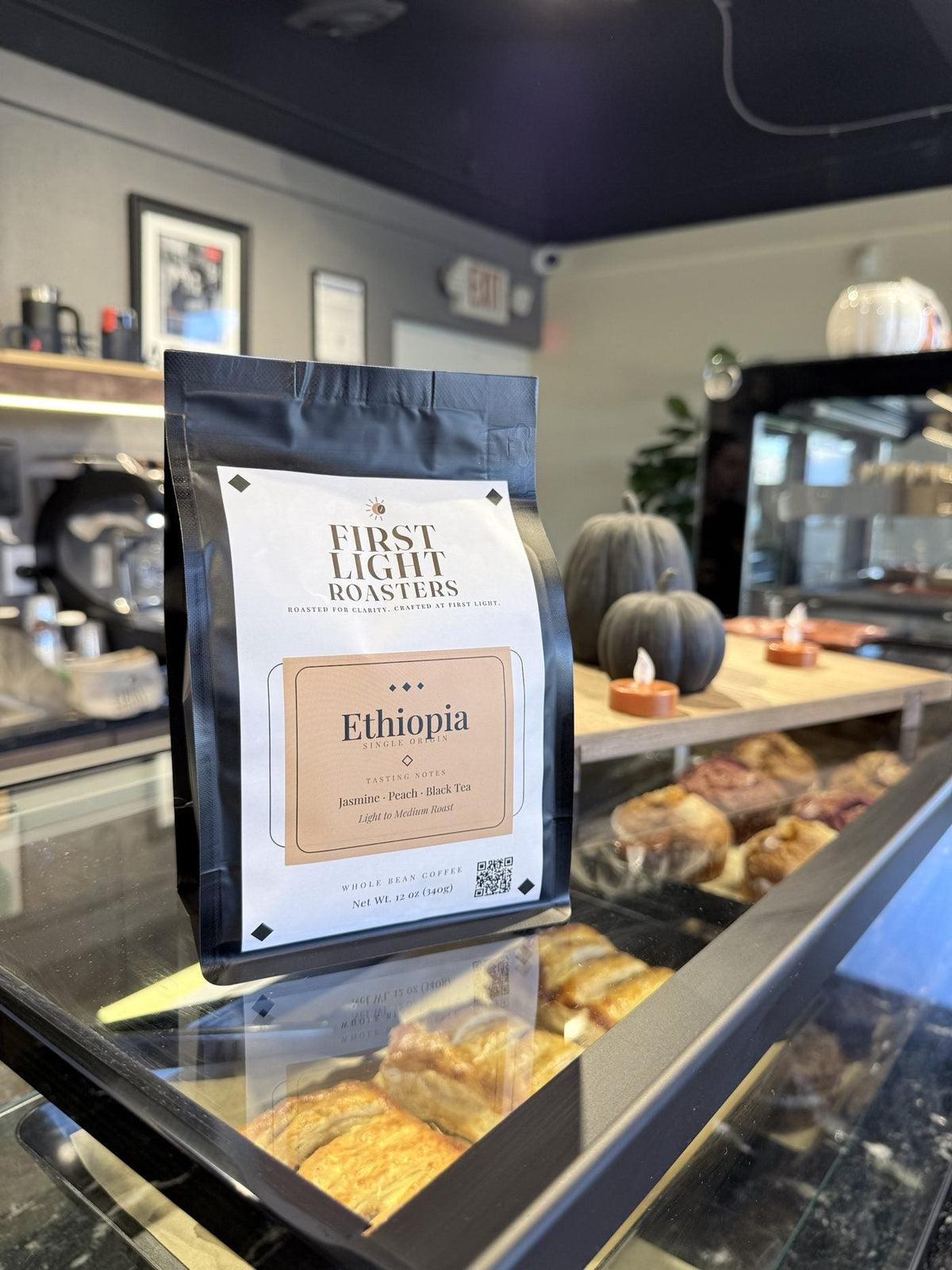
Our Ethiopia is a washed Grade 2 coffee from the Guji zone in southern Ethiopia. In the cup: jasmine on the nose, ripe peach through the middle, and a clean black tea finish. Below is where it comes from, how we roast it, how to brew it at home, what to eat with it, and the ceremony that has carried coffee in Ethiopia for generations.

Our Ethiopia on the pastry case at Detroit Halite, the cafe in front of our roastery. Jasmine, peach, black tea, roasted light to medium.
Shop our Ethiopia coffee. Roasted to order in Livonia and shipped within 48 hours of roast.
Where Guji is, and why it matters
We call Ethiopia the Asl: the origin, the root every other cup grows from. Arabica coffee began in the forests of Ethiopia, and the country still grows hundreds of native varieties that coffee buyers group together as "heirloom."
Guji is a zone in the Oromia region of southern Ethiopia, named for the Guji people, a branch of the Oromo. It sits just south of Sidama and beside Gedeo, home of Yirgacheffe. Until the early 2000s, Guji coffee was usually sold under those better-known names. Today it is recognized as its own origin, and specialty buyers seek it out by name.
What makes Guji taste the way it does is altitude and forest. Much of the coffee grows around 1,900 to 2,300 meters above sea level, on small family plots under native shade. Cool nights slow how fast the cherries ripen, which builds denser beans and more layered sweetness. For most households here, coffee is grown alongside food crops and is the main source of cash income.

Our Guji, green and unroasted, straight from the sack at our Livonia roastery. This is how every batch starts.
This coffee at a glance
| Origin | Guji zone, Oromia, southern Ethiopia |
|---|---|
| Grade | Grade 2 |
| Process | Washed |
| Variety | Ethiopian heirloom |
| Altitude | Around 2,000 meters |
| Roast | Light to medium |
| Tasting notes | Jasmine, peach, black tea |
| Best as | Pour-over, Chemex, AeroPress |
Washed means the fruit is removed from the seed before drying. That gives a clean, clear cup where the florals and stone fruit come through sharply, instead of the heavier, jammy fruit you get from a natural-process Ethiopian. It is a traceable lot brought in through a trusted importer.

Washed Grade 2 Guji before roasting: clean, even, dense beans.
How we roast it
We roast this coffee light to medium on our Diedrich roaster in Livonia, one batch at a time, to order.
The goal is simple: keep the jasmine and peach, and build just enough sweetness and body for a round cup. Washed Guji beans are dense, so we give them a steady, even heat through the early stage of the roast. After first crack, we keep development short and drop the batch well before second crack. Push it darker and the florals fade into generic roast flavor; pull it too early and the cup turns grassy and sour. We cupped this lot ourselves at our Livonia roastery, and jasmine, peach, and black tea are the notes we stand behind.

Fresh out of the roaster: light to medium, with the pale center line still showing in the middle of each bean. That line is how you know the roast stayed light enough to keep the florals.
Every bag carries its roast date. This coffee tastes its best from about 5 to 21 days after roast. Lighter roasts like this one often open up after the first week, so if your bag arrives very fresh, give it a few days.
Brewing guide

Ethiopia brewed and served at Detroit Halite. Notice how clear the cup is: light passes right through it, the tea-like body this coffee is known for.
Start with filtered water and a scale. A 1:16 ratio (1 gram of coffee to 16 grams of water) is our baseline. Grind right before you brew.
Pour-over (V60 or Kalita): our pick
- Dose: 20 g coffee, 320 g water
- Water: about 200°F (just off the boil)
- Grind: medium, like table salt
- Bloom: pour 50 g, wait 30 to 45 seconds
- Pour: slow circles to 320 g by about 1:45
- Total time: about 3:00 to 3:30
Pour slowly and smell the cup before you sip. The aromatics come first with this coffee.
Chemex
- 40 g coffee to 640 g water, medium-coarse grind, about 200°F
- Bloom 45 seconds, then pour in stages
- Total time about 4:00 to 4:30
The thick filter gives an especially clean, tea-like cup.
AeroPress
- 15 g coffee to 240 g water, medium-fine grind, paper filter
- Water around 185°F
- Steep 1:30, stir, press gently for 30 seconds
The lower temperature brings out the black tea and softens the acidity.
Drip machine and iced
On a home drip brewer, use about 60 g of coffee per liter of water at a medium grind. For iced pour-over, brew 20 g of coffee with 200 g of hot water directly onto 120 g of ice. The peach note gets brighter as it chills.
Tip: if the cup tastes sour or thin, grind a little finer. If it tastes bitter or dry, grind a little coarser.
What to eat with it
Pair to the notes. Jasmine and peach want butter, honey, and soft fruit, not heavy chocolate that would cover them.
- Madeleines. Butter and a hint of citrus sit right next to the jasmine. Our favorite pairing in the cafe case.
- Pound cake. Simple vanilla sweetness lets the peach note lead.
- Strawberry cheese danish. Bright fruit meets bright fruit; the cream cheese softens the acidity.
- Plain butter croissant. Clean, flaky, and lets the coffee do the talking.
- Cheesecake. Rich and tangy, a good contrast to a light, clean cup.
- At home: honey-drizzled shortbread, almond biscotti, or fresh peaches.
To keep it traditional, serve it the Ethiopian way: with a bowl of fresh popcorn, or kolo (roasted barley and grains) and dabo kolo, small crunchy bites of spiced bread. Visit Detroit Halite, the cafe in front of our roastery, to try Ethiopia with something from the pastry case.
The Ethiopian coffee ceremony
In Ethiopia, coffee is called buna, and drinking it is rarely a grab-and-go moment. The coffee ceremony, often called jebena buna after the clay pot at its center, is a daily act of hospitality that can last an hour or more. One proverb says it plainly: coffee is our bread.
A popular legend credits a goat herder named Kaldi with discovering coffee after his goats grew lively from eating red cherries. It is a story, not a record, but it reflects something true: Ethiopia is where people first came to know this plant, and the ceremony carries that history forward.
The ceremony is traditionally led by a woman of the household, and preparing it is considered an honor. It usually unfolds like this:
- Setting the space. Fresh grass or flowers may be spread on the floor, and frankincense is lit on a small burner.
- Washing and roasting. Green coffee is rinsed, then roasted in a flat pan over coals in front of the guests. The smoking pan is carried around the room so everyone can take in the aroma.
- Grinding. The beans are ground by hand, traditionally with a mortar and pestle.
- Brewing. The grounds are boiled in the jebena, a round clay pot with a long neck. Without a jebena, many would say it isn't a coffee ceremony at all.
- Serving in three rounds. Coffee is poured from a height into small handleless cups, often with sugar, and in some rural areas salt or butter.
The three rounds each have a name. Abol is the first and most concentrated pour, often offered first to the eldest or most honored guest. Tona is the second, brewed again from the same grounds. Baraka is the third and lightest, and its name means blessing. Leaving before the third cup is considered impolite. Popcorn, kolo, or bread is passed around the whole time, and the conversation is the point.
Ethiopian families around the world, including here in metro Detroit, keep the ceremony alive at home, at weddings, and at gatherings. The jebena often travels with them.
A three-round tasting at home
You don't need a jebena to borrow the spirit of the ceremony. Brew a pour-over of our Ethiopia, pour three small cups for friends, and taste it as it cools. The first sip shows jasmine, the middle shows peach, and the cooled cup shows black tea. Put out a bowl of popcorn, slow down, and let the third cup be the blessing.
First Light Roasters is co-founded by Sam Noor and Amal Almaflahi. Roasted for clarity. Crafted at first light.


Leave a comment
This site is protected by hCaptcha and the hCaptcha Privacy Policy and Terms of Service apply.