

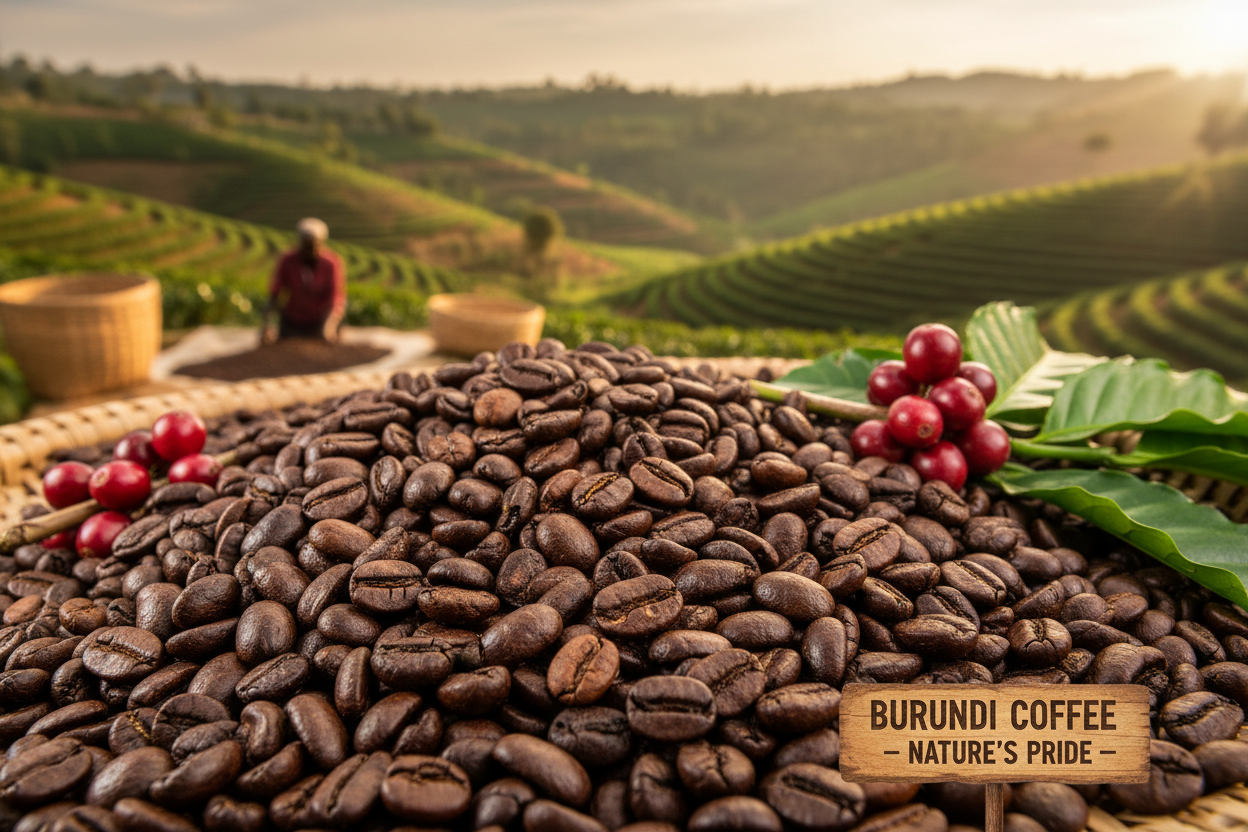
The Burundi Frontier: Spicy Soul & Bourbon Mastery
I. Introduction: The Aromatic Soul of the Colline
In the specialty coffee world of 2026, we have analyzed the genetic birthplace of Ethiopia, the precision of Kenya, and the resilience of Rwanda. But to finalize our East African tour, we must address the "Spicy Soul" of the region: Burundi. At First Light Roasters, our motto: "Roasted for Clarity. Crafted at First Light": refers as much to the technical transparency of our process as it does to the geological purity of the Burundi hills.
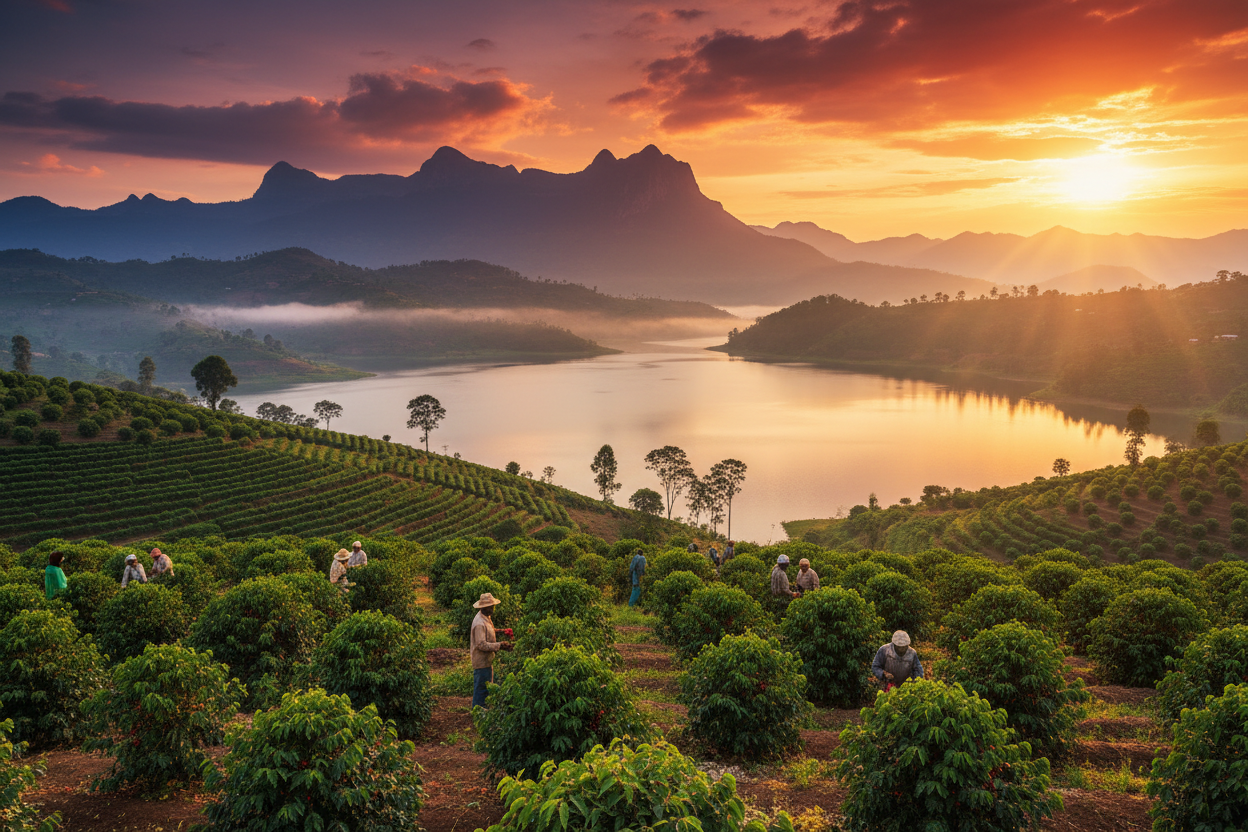
Burundi is a nation defined by its verticality (a landscape of thousands of "collines" or hills) where coffee is the primary economic catalyst for over 600,000 to 800,000 small-holder families. While it shares a border and many genetic traits with Rwanda, Burundi coffee offers a "wilder" and more unpredictable chemical profile: a byproduct of its nutrient-rich volcanic soil and a unique "Double-Wash" processing tradition that isolates the bean's most delicate acids. In this final chapter of our Biographic Series, we explore the anthropology of the "50-Tree Mandate," the mineralogy of the northern provinces, and why the 2026 professional prizes Burundi for its "Honey-Spice" clarity. This is the Burundi Synthesis.
II. The Anthropology of Imposition: 1920 to 1962
The history of coffee in Burundi is a story of a biological asset born out of a colonial mandate. To understand the pursuit of clarity in Burundi today, we must acknowledge the forced beginnings of its production.
2.1 The Belgian Era: The "50-Tree" Mandate
Coffee cultivation in Burundi began in the 1920s when Belgian settlers introduced the first Arabica coffee trees. By the early 1930s, the colonial government had implemented a mandatory system: every local farmer was given seedlings and forced to grow at least 50 coffee trees. This imposition was often met with resistance; farmers received little to no money for their labor while the harvest was exported to Europe to meet colonial demand. This era left a complex psychological legacy (where coffee was once seen as a symbol of colonial oppression rather than a source of wealth).
2.2 Independence and Nationalization (1962-1990)
Upon achieving independence in 1962, the young Burundian government invested heavily in the sector with assistance from the World Bank. This period saw a rapid increase in tree planting and the construction of state-managed washing stations. However, the sector fluctuated between privatization and government control (nationalized in 1972) which created inconsistencies in quality and producer margins.
2.3 The Setback and the Renaissance (1993-2026)
The devastating civil war from 1993 to 2005 caused a severe decline in production; many farmers abandoned or destroyed their coffee trees to plant survival crops like beans or potatoes. It was only in the early 2000s, influenced by Rwanda's specialty success, that Burundi began to rebuild its industry with a focus on quality over quantity. In 2026, initiatives like the Long Miles Coffee Project and JNP Coffee have revolutionized the market, connecting these smallholders to the global specialty stage and reclaiming coffee as a symbol of resilience and innovation.
III. Terroir: The Mineral Mosaic of the North and Central Provinces
Burundi is a small country, yet it offers remarkable diversity in its micro-climates. In 2026, we categorize our sourcing into three primary technical zones.
3.1 Buyenzi (Kayanza and Ngozi): The Aromatic Heart
The northern region of Buyenzi is the birthplace of the finest Burundian coffee.
- Kayanza: The most famous province in the specialty world. Located between 1,700 and 1,950 masl, Kayanza is defined by its high acidity and bright, citric profiles. Technical cupping notes for Kayanza lots often include lemongrass, stone fruit, and a distinct "Tea-Like" tanginess.
- Ngozi: Often more approachable than Kayanza, Ngozi coffees offer a fruit-forward profile of berries and citrus paired with milk chocolate notes. In 2026, we prize Ngozi for its medium body and balanced, "chuggable" sweetness.
3.2 Gitega and Karuzi: The Sweet Center
Central Burundi (Gitega) sits in the mountainous center of the country. These coffees are delightfully sweet with lower, more approachable acidity compared to the North. Expect a "pillowy" body with notes of caramel, brown sugar, and stone fruit. For the entrepreneur seeking a stable morning fuel, the Gitega profile provides a deep, complex sweetness that supports sustained focus.
3.3 Muyinga and Kirundo: The Floral Fringe
Located in the extreme northeast, these regions are recognized for their delicate floral aromatics (jasmine and orange blossom) and tropical fruit characteristics like pineapple. The volcanic soil and high rainfall (1,200 mm per year) contribute to a "syrupy" sweetness that lingers on the palate long after the sip.
IV. Botanical Purity: The Reign of the Old Bourbon
While other origins have shifted toward high-yield hybrids, Burundi has maintained a relentless focus on the Bourbon varietal.
4.1 The Bourbon Advantage
Almost all coffee grown in Burundi is the Bourbon varietal (including strains like Mibirizi and Jackson). Bourbon is genetically predisposed to produce high levels of sucrose, which, when grown at altitudes reaching 2,000 meters, creates a dense and sugar-packed bean. In 2026, we utilize Aromatic Profiling to ensure that our roasts highlight the "Candy-Like" finish that only high-altitude Bourbon can deliver.
4.2 The Aging Tree Paradox
Many coffee trees in Burundi are over 40 years old. While these older trees often produce lower yields, they can produce beans with a more "concentrated" flavor profile. At First Light Roasters, we work with cooperatives that provide regenerative training to manage these aging forests: ensuring that the pursuit of clarity is sustainable for the next 40 years.
V. The Technical Signature: The Physics of the Double-Washed Process
The "Burundi Signature" is defined by its extreme cleanliness (a result of the most intensive processing system in the Rift Valley).
5.1 The 12-12-12 Protocol
Practically all specialty coffee in Burundi undergoes a "Double-Wash" process. This involves:
- The Dry Ferment (12-24 Hours): After pulping, the beans sit in dry tanks to begin breaking down the mucilage.
- The Wet Ferment (12-24 Hours): The beans are moved to a second tier of tanks and submerged in clean water, allowing for a deeper, secondary breakdown of sugars and proteins.
- The Final Soak (12-24 Hours): A final wash and soak in clean mountain water stabilizes the bean's water activity before it is moved to the raised drying beds.
5.2 Why Double-Washing Equals Clarity
By removing every microscopic trace of fruit residue, the double-wash process allows for a "Transparent Cup". This ensures that the flavor notes you experience are a result of the bean's internal chemistry: not the fermentation noise of the process. In 2026, we analyze these lots for their high SCA scores (often reaching 86+), ensuring that the spicy and honeyed volatiles are the stars of the experience.
VI. The 2026 Landscape: Renaissance and Global Trade
As of January 2026, Burundi has entered a new chapter in its agricultural trade strategy.
6.1 The 2025-2026 Harvest Projection
The 2025/2026 coffee harvest is expected to reach between 12,000 and 13,000 metric tons of green coffee. While this is a moderate yield (impacted by lower rainfall in early 2025), field visits confirm that soil moisture remains high, and quality protocols are in place to ensure this season's coffees showcase Burundi at its best. The harvest generally starts in late March with all washing stations running at full capacity by April 10.
6.2 The China Milestone
In August 2025, Burundi dispatched its first coffee shipment to China in a milestone trade deal. This direct export model is a radical shift from the colonial-era routes through Europe: giving Burundian growers a larger share of the profits and fostering sustainable growth in the sector. At First Light, we see this as a sign of a more equitable and transparent global market.
6.3 The Economic Weight
Coffee remains the lifeblood of Burundi, providing approximately 80% of the country's foreign exchange earnings. In 2026, the success of the specialty sector is not just a luxury (it is a macroeconomic necessity for national recovery and the empowerment of youth and women in the value chain).
Conclusion: The Pursuit of Spicy Clarity
Burundi coffee is much more than a beverage: it is a symbol of resilience, tradition, and technical innovation. By mastering the high-altitude collines, the Bourbon genetics, and the intensive double-wash system, Burundi has earned its place as a mandatory stop in the pursuit of clarity.
At First Light Roasters, we are proud to showcase the "Spicy Soul" of this African frontier. We roast to reveal the stone fruit, the honey, and the technical definition that only the Heart of Africa can provide. This is exceptional specialty coffee, crafted at first light, for a refined and full-bodied experience consistently delivered on a global scale. Experience the frontier. Experience the clarity.
Experience the Honeyed Clarity of Burundi Sourced from the high-altitude washing stations of Kayanza and Ngozi. Shop our Burundian Collection
FAQ: Burundi Coffee and Technical Mastery
What makes Burundi coffee taste like "honey"? The high sweetness is a result of the Bourbon varietal (which has a naturally high sucrose content) grown in nutrient-rich volcanic soil. When grown at altitudes of 2,000 meters, the cherry matures slowly, allowing for a deep concentration of sugars that translate into honey and berry notes in the cup.
What is "Double-Washed" coffee? Double-washing is a meticulous processing method involving two separate fermentation stages (dry and wet) followed by a clean water soak. This ensures absolute cleanliness by removing all residual fruit matter, resulting in a cup with unparalleled clarity.
Is Burundi coffee the same as Rwanda coffee? While they share a border and the Bourbon varietal, Burundi coffee is often described as "wilder" and more complex. It often features a unique "spicy" finish (clove or cinnamon) that is less prevalent in the silky, red-fruit profiles of Rwanda.
Why is Kayanza the premier region? Kayanza possesses some of the highest altitudes in Burundi (up to 2,000 masl) and a mild climate. This environment produces coffees with exceptional high acidity and bright citric notes that consistently achieve high SCA ratings.
What is a "Colline"? "Colline" is the French word for "hill". In Burundi, the hill is the fundamental geographic and social unit of coffee production; most lots are named after the specific colline where the farmers live and harvest their cherries.
How much coffee does Burundi produce in 2026? For the 2025/2026 season, Burundi is expected to produce approximately 12,000 to 13,000 metric tons of green coffee. While lower than historic peaks, the focus has shifted entirely to high-value specialty quality.
What is "Potato Taste Defect" (PTD)? PTD is a natural defect sometimes found in East African coffees that smells like raw potatoes. In 2026, this is largely eradicated in specialty lots through meticulous hand-sorting and infrared screening at modern washing stations.
How should I brew Burundi coffee? To highlight the delicate florals and bright acidity, we recommend a Pour-Over (V60 or Kalita) with mineral-balanced water. For those seeking a more approachable, sweet experience, a French Press works beautifully for central Gitega lots.
Is Burundi coffee ethical? Yes; modern initiatives like the Long Miles Coffee Project and JNP Coffee focus heavily on living incomes for farmers, the inclusion of youth and women, and the building of community-owned washing stations.
Does First Light roast Burundi coffee dark? Never; we use a light-medium roast to ensure the delicate monoterpene alcohols (citrus and floral notes) are protected while fully developing the Bourbon caramels for a sweet, clean finish.

Leave a comment
This site is protected by hCaptcha and the hCaptcha Privacy Policy and Terms of Service apply.