


The Zambian Frontier: Mafinga Hills & Honey Gold
I. Introduction: The High Plateau Architecture
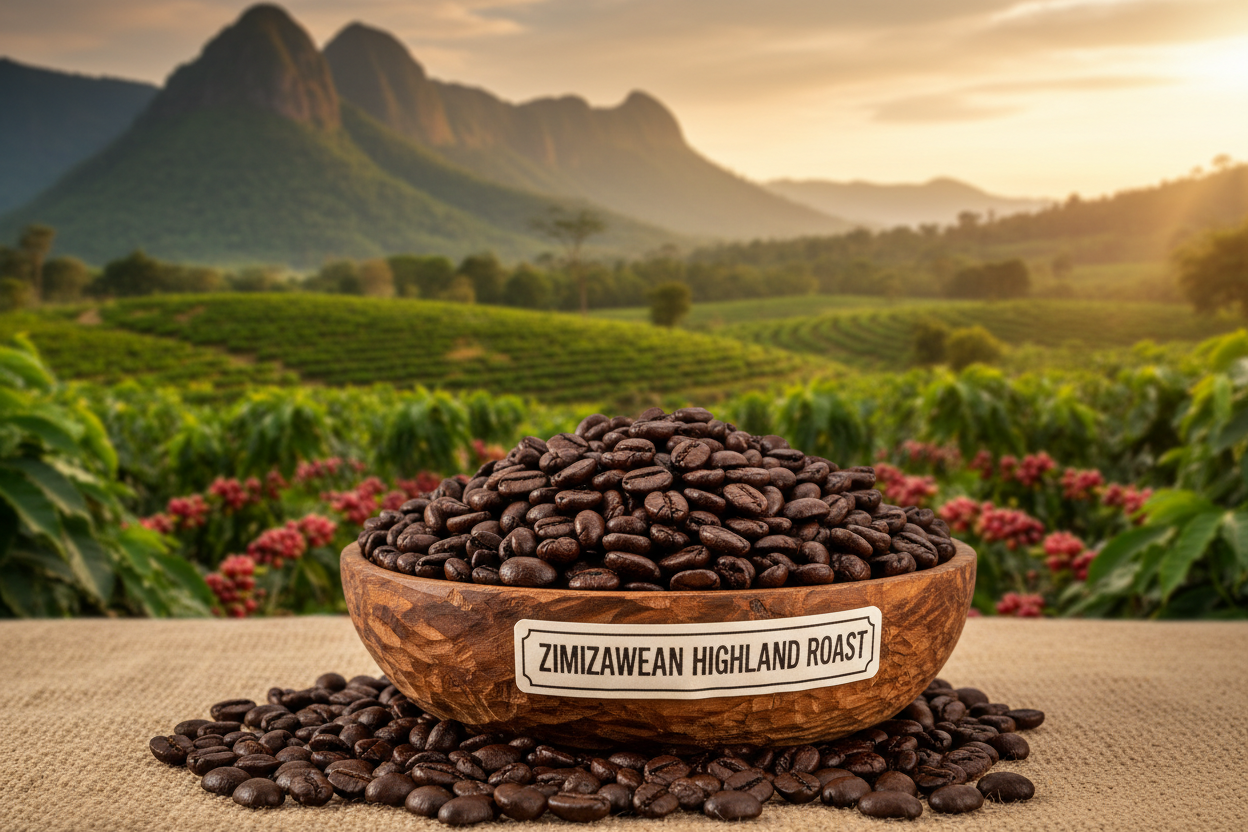
In the high-resolution specialty market of 2026, we have analyzed the ancient soul of Ethiopia and the precision of Kenya. But to complete the southern map of the Great Rift Valley, we must look to the "High Plateau" sovereign: **Zambia**. At First Light Roasters, our motto: "Roasted for Clarity. Crafted at First Light": finds its most balanced expression in the high-altitude lots of the Northern Province.
Zambia is a unique sovereign in the coffee world because it is relatively young (commercial production only gained significant traction in the 1950s). Unlike the smallholder-dominated landscapes of Ethiopia or Rwanda, Zambia’s industry was built on a "Go Big or Go Home" philosophy: utilizing large-scale estates, advanced irrigation, and a relentless focus on production efficiencies. However, the 2026 reality is a story of a "Specialty Rejuvenation". Driven by massive investments in the **Northern Coffee Corporation (NCCL)** and a national shift toward a "Green Economy," Zambia is producing profiles that are "inimitable": a lively complex flavor profile that combines medium body with a distinct, spicy aroma. In this fifth chapter of our Biographic Series, we explore the mid-century arrival of the seed, the mineralogy of the Muchinga Mountains, and the 2026 "Honey Gold" revolution. This is the biography of the Zambian Frontier.
II. The Anthropology of Origin: 1950 to 2026
The history of coffee in Zambia is a journey from colonial experimentation to a centralized specialty powerhouse.
2.1 The British "Go Big" Era (1950s to 1980s)
While original attempts at coffee planting occurred near Lusaka in the early 20th century, they were short-lived as the trees failed to take root in the unfavorable environment. The true commercial history began in the 1950s when British colonists introduced seedstock from **Tanzania** and **Kenya**. Coming late to the coffee game, the British utilized their extensive experience from India and Kenya to build large, orderly plantations designed for maximum yield and full-sun production. By the 1980s, the International Coffee Organization (ICO) granted Zambia its first export quota of 350 tons (officially launching the nation onto the world stage).
2.2 The Era of Decline and Olam’s Rejuvenation (2000 to 2012)
Zambian production peaked in the early 2000s at just under 7,000 metric tons, but a global oversupply and low prices led to a drastic collapse. Many estates, unable to secure financing for the expensive irrigation systems required for the arid climate, uprooted their trees in favor of easier crops like wheat. In 2012, a major pivot occurred: Olam International acquired the Northern Coffee Corporation (NCCL). This $40 million investment rejuvenated five major estates (including the historic **Kateshi Estate**) and established Zambia as a leader in industrial specialty production.
2.3 2026: The "Green Economy" and Smallholder Integration
In 2026, the Zambian government has identified coffee as a critical tool for climate mitigation. Because coffee trees act as "Major Carbon Sinks" (absorbing up to 5 tonnes of carbon per hectare when planted with shade trees), the state has instituted various measures to encourage small-scale production. This shift is diversifying the market: complementing the large estate "AAA" lots with high-clarity micro-lots from emerging smallholder groups in the Northern Province.
III. Terroir: The Mineralogy of the Muchinga Mountains
Zambia is a landlocked plateau nation where coffee thrives in the northern highlands bordering Tanzania and Malawi.
3.1 The Northern Province: The High-Altitude Engine
The Northern Province produces approximately 97 percent of Zambia's exportable coffee.
- Muchinga Mountains: The districts of Nakonde, Kasama, and Isoka form the heart of the "High Plateau". The proximity to the equator and abundant altitude (950 to 1,700 masl) provide the ideal temperature range of $13^\circ\text{C}$ to $29^\circ\text{C}$.
- Mafinga Hills: Home to the highest point in Zambia (2,300 masl), these hills are the source of the most "Kenyan-like" brightness in our collection. The volcanic, sandy-loam-clay soils are naturally acidic ($pH$ 5.0 to 6.0), which is mandatory for the development of complex citric acids.
3.2 The Southern Province and Lusaka
While the north is the specialty center, smaller estates exist around the capital city of Lusaka and in the Southern Province near Victoria Falls. These lower-elevation lots (approximately 1,000 to 1,200 masl) often produce a milder, less acidic cup that is perfect for high-definition **Espresso Blends**.
IV. Varieties and Chemistry: The "SL" Heritage and the Catimor Pivot
Like its East African neighbors, Zambia relies on high-quality Arabica genetics, but with a specific focus on 2026 disease resistance.
4.1 The Sensory Signature: Black Cherry and Brown Spice
Technical cupping for Zambian coffee reveals a profile that is "Bright and Elegant".
- Primary Notes: Black cherry, caramel, and red apple skin.
- Secondary Notes: Cinnamon, brown spices, and subtle floral undertones.
- Mouthfeel: A medium to full body with a clean, light finish.
4.2 The "SL" Lineage vs. Catimor 129
In 2026, we categorize Zambian production into two genetic tiers:
- The Traditional Elite: Varieties like **SL28** and **SL34** (brought from Kenya) are grown in the highest elevations of the Mafinga Hills. These produce the vibrant, "Kenyan-like" acidity that roasters seek.
- The Modern Resilient: Semi-dwarf varieties like **Catimor 129** and **Java** are widely planted for their resistance to coffee leaf rust and high yield potential. While historically criticized for lower cup quality, 2026 processing techniques like anaerobic fermentation have unlocked new levels of sweetness in these hybrids.
V. The Technical Signature: The "Honey Gold" Revolution
Zambia has become a pioneer in processing experiments to overcome its lower-than-average Rift Valley altitudes.
5.1 Honey Processing and Anaerobic Naturals
In 2026, the **"Honey Gold"** process is the technical standard for the First Light Zambian collection. In this method, the outer skin is removed, but the bean is dried with the sticky mucilage (fruit) attached. This interaction between the fruit layer and the arid drying climate of the Zambian harvest season results in a "Syrupy" sweetness that masks the green-apple bitterness often found in lower-elevation Catimors.
5.2 The Ecopulping Precision
On large estates like **Kateshi**, pickers deliver cherries to ecopulping stations within 6 hours of picking. These modern facilities use little to no water, pulping the cherries mechanically before fermenting them in tanks for 16 to 24 hours (depending on weather conditions). The beans are then dried on a combination of raised tables and hot air beds to ensure absolute uniformity. This technical oversight is the mandatory foundation of the pursuit of clarity.
VI. The 2026 Socio-Economic Reality: Gender and Conservation
The modern Zambian coffee sector is built on a foundation of social impact and environmental stewardship.
6.1 Challenging Gender Stereotypes
A landmark achievement of the Zambian coffee industry is its focus on gender equality. The Kateshi Estate was the first in the country to employ women for traditionally male-dominated roles: such as driving bulldozers and operating heavy machinery. In 2026, this commitment has expanded across the Northern Province, where women-led "Section" groups manage large-scale harvesting operations with surgical precision.
6.2 The Buffer Zone Policy
Zambian estates are leaders in 2026 conservation efforts. Large properties like **Issanya Estate** dedicate nearly 50 percent of their land to protected forest "Buffer Zones" to preserve the natural ecosystem and provide safe drinking water to local communities. These estates are Rainforest Alliance and Utz certified, ensuring that the luxury asset of specialty coffee supports a resilient planet.
Conclusion: The Sovereign of Scale
Zambia is a nation of technical extremes and refined balance. By mastering the high-altitude Mafinga Hills, the "Honey Gold" process, and the large-scale estate model, Zambia has earned its place as a mandatory stop in the pursuit of clarity.
At First Light Roasters, we are honored to showcase the "Bright Elegance" of this southern plateau. We roast to reveal the black cherry, the cinnamon, and the technical definition that only the Sovereign of Scale can provide. This is exceptional specialty coffee, crafted at first light, for a refined and full-bodied experience consistently delivered on a global scale. Experience the frontier. Experience the clarity.
Experience the Honeyed Clarity of Zambia
Sourced from the high-altitude Mafinga Hills "AA" lots. Shop our Zambian Collection
FAQ: Zambian Coffee and Technical Mastery
What makes Zambia coffee taste different from Kenya coffee?
While they share some SL varietals, Zambian coffee is generally less "bright and acidic" than Kenyan coffee. It offers a more balanced profile with medium body, featuring notes of red apple, cocoa, and brown spices rather than the intense blackcurrant "Snap" of Kenya.
What is "Honey Process" in Zambia?
The honey process involves pulping the cherries using little or no water and drying the beans with the remaining fruit (mucilage) layer still attached. This process creates a "Honey Gold" sweetness and tropical fruit notes that differentiate Zambia from traditional wet-process origins.
Why is the Northern Province the main area for coffee?
The Northern Province (particularly around Kasama and Nakonde) offers the best conditions for Arabica: high altitude (up to 1,700 masl), proximity to the equator, and abundant rainfall. These regions possess the acidic volcanic soils required for specialty quality.
Is Zambian coffee "Estate Grown"?
Yes; approximately 97 percent of Zambia's exportable coffee is produced by large-scale estates, with the **Northern Coffee Corporation (NCCL)** being the largest producer. These estates utilize advanced irrigation and technical management that smallholders often cannot access.
What are the specialty grades in Zambia?
Zambia uses a system similar to Kenya, with grades including **AAA, AA, AB, and Peaberry (PB)**. AAA and AA represent the largest and densest beans, which are mandatory for high-definition roasting.
How does climate change affect Zambia?
Zambia is highly susceptible to drought; production dropped significantly in 2006 and 2015 due to harsh weather conditions. In 2026, the government promotes coffee as a "Carbon Sink" to mitigate these effects through shade-grown agroforestry.
How should I brew Zambian coffee?
To highlight the bright fruit and brown spice notes, we recommend a **Pour-Over** (V60) or **Iced Coffee**. For honey-processed lots, a week of aging after roasting is recommended to allow the sweetness to fully mature.
Why is 2026 a landmark year for Zambia?
2026 marks the point where Zambia's shift toward "Climate-Smart" coffee and the maturation of its anaerobic and honey processing experiments has officially positioned it as a world-class single-origin competitor.
What is "Task-Salience"?
As explored in our productivity guides, task-salience is the cognitive ability to stay focused on a goal. The clean energy and complex spice profile of Zambian coffee are particularly effective at supporting this cognitive state.


Leave a comment
This site is protected by hCaptcha and the hCaptcha Privacy Policy and Terms of Service apply.