

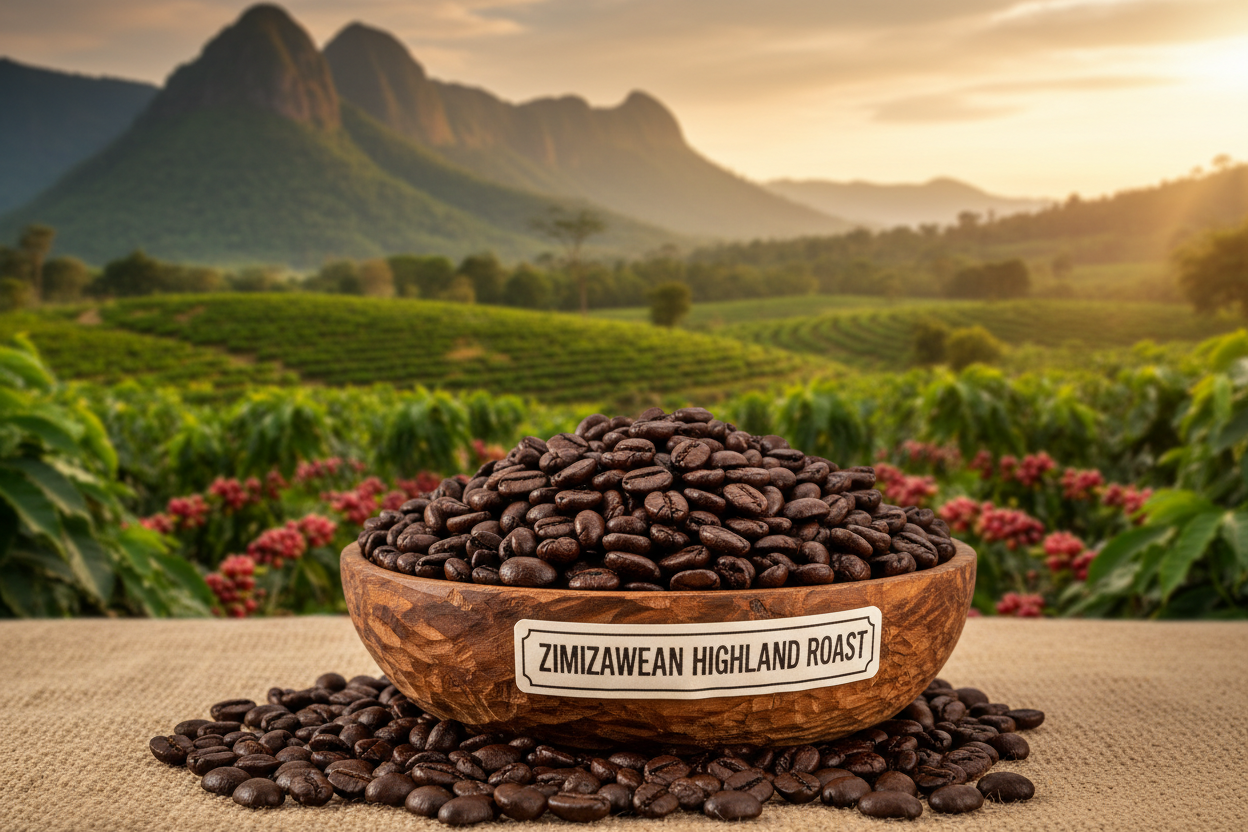
The Zimbabwe Frontier: Highlands & The Chipinge Profile | First Light Roasters
I. Introduction: The Renaissance of the Eastern Borderlands
In the high-resolution specialty market of 2026, we have analyzed the ancient soul of Ethiopia and the plateau scale of Zambia. But to finalize the East African map, we must address the most resilient sovereign of all: **Zimbabwe**. At First Light Roasters, our motto: "Roasted for Clarity. Crafted at First Light": finds its most exclusive expression in the high-altitude micro-lots of the Honde Valley.
Zimbabwe is a unique sovereign in the coffee world because it is currently undergoing a "V-Shaped Recovery". During the late 1980s, Zimbabwe was a top-tier global producer (exporting over 15,000 metric tons of high-grade Arabica annually). However, land reforms and economic instability in the early 2000s saw production vanish almost entirely. The 2026 reality is a story of a technical rebirth. Driven by international partnerships and a relentless focus on the "Chipinge Standard," Zimbabwe is back on the global stage. In this final chapter of our Biographic Series, we explore the 1960s "Peak Era," the mineralogy of the Eastern Highlands, and the 2026 smallholder revolution. This is the biography of the Zimbabwe Frontier.
II. The Anthropology of Origin: 1960 to 2026
The history of coffee in Zimbabwe is a journey from industrial dominance to a high-definition smallholder renaissance.
2.1 The Peak Era (1960s to 1990s)
Commercial coffee production in Zimbabwe began in earnest in the 1960s, primarily in the southeastern district of Chipinge. Utilizing seeds from the Bourbon and Caturra lineages, Zimbabwean farmers built a reputation for produce that was "consistently elite". By 1989, Zimbabwe reached its zenith (producing 15,000 tons of coffee known for its complex, wine-like acidity). These were the "Golden Years" of the Chipinge profile, where Zimbabwean lots were the primary competition for the best Kenyan and Tanzanian offerings.
2.2 The Great Collapse and the Honde Valley Shift (2000 to 2017)
The 2000s were a period of extreme hardship for the industry. Land redistribution policies and a lack of access to international finance led to the abandonment of the large Chipinge estates. By 2017, production had dropped by over 97 percent, with only a handful of committed smallholders in the Honde Valley keeping the industry alive. During this "Dark Era," the technical knowledge of the Zimbabwean profile was nearly lost.
2.3 2026: The Technoserve and Nespresso Quality Recovery
In 2018, a major pivot occurred: a partnership between Nespresso and Technoserve was launched to revive the Zimbabwean coffee industry. In 2026, this program has successfully trained over 2,000 smallholder farmers in the Honde Valley and Chipinge regions on "Climate-Smart" agricultural practices. This investment has funded new micro-washing stations and provided the 2026 digital traceability required for premium buyers like First Light. Zimbabwe has officially returned to the specialty map as a producer of rare, high-clarity Arabica.
III. Terroir: The Mineralogy of the Eastern Highlands
Zimbabwe’s coffee geography is concentrated entirely along its mountainous eastern border with Mozambique.
3.1 The Chipinge District: The Original Soil
Chipinge is the historical heart of the industry.
- Elevation: Sitting between 1,100 and 1,400 masl, Chipinge offers a temperate climate with high humidity.
- Soil: The soil is deep, red, and volcanic (Ferralsols), rich in minerals but requiring careful management to maintain pH levels. This soil is the architect of the "Zesty" finish found in our Chipinge lots.
3.2 The Honde Valley: The Smallholder Stronghold
The Honde Valley has emerged as the most resilient specialty region in 2026. Surrounded by the Nyanga Mountains, this valley experiences a "Micro-Mist" effect that keeps coffee trees hydrated even during the dry season. At altitudes of up to 1,600 masl, the Honde Valley produces a cup that is "Soft and Vinous" (a profile that bridges the gap between the intensity of Kenya and the silkiness of Rwanda).
IV. Varieties and Chemistry: The SL and Catimor Balance
Like its neighbors, Zimbabwe relies on a mix of heritage Arabica and modern resilient varietals.
4.1 The Sensory Signature: Zesty Lemon and Sweet Ginger
Technical cupping for Zimbabwean coffee reveals a profile that is "Rare and Refined".
- Primary Notes: Zesty lemon, ginger, and honey.
- Secondary Notes: Grapefruit, green apple, and dark chocolate.
- Mouthfeel: A medium body with a crisp, wine-like acidity and a long, sweet finish.
4.2 The Varietal Mix: SL28 and Catimor 129
In 2026, we categorize Zimbabwean production into two genetic tiers:
- The Legacy Profile: Varieties like **SL28** and **SL34** (originally from Kenya) provide the high-frequency acidity and floral notes that made Zimbabwe famous in the 1980s.
- The Recovery Profile: Varietals like **Catimor 129** and **Caturra** are favored by smallholders for their high yield and resistance to coffee berry disease. Through 2026 processing standards, we have unlocked a "Syrupy Sweetness" in these lots that supports the pursuit of clarity.
V. Technical Signature: The Micro-Station Revolution
Zimbabwe has become a global leader in small-scale technical precision.
5.1 The Rise of Centralized Washing
Historically, smallholders processed coffee at home (resulting in "Processing Noise" and defects). In 2026, the Honde Valley is home to centralized micro-washing stations equipped with high-efficiency pulpers. Farmers deliver fresh cherries within hours of picking, and the coffee undergoes a strictly monitored 18 to 24-hour fermentation. This technical shift is the reason for the "Surgical Cleanliness" found in First Light Zimbabwean roasts.
5.2 Precision Sun-Drying
Because of the high humidity in the Eastern Highlands, drying is a technical challenge. In 2026, farmers utilize raised African drying beds equipped with "2026 Shade Nets". These nets protect the parchment from the midday sun, slowing the drying process to a mandatory 14 to 21 days. This slow-dry protocol stabilizes the bean's water activity ($a_w$), ensuring that the "Zesty Clarity" is preserved from the valley to your door.
VI. The 2026 Socio-Economic Reality: Traceability and Luxury
The modern Zimbabwean coffee sector is built on a foundation of high-value luxury and ethical assurance.
6.1 The "Exclusivity" Premium
In 2026, Zimbabwe is one of the world's most exclusive origins. With national production still under 1,000 metric tons, every lot is a "Micro-Lot" by definition. This rarity allows farmers to command significant quality premiums from roasters like First Light. For the high-performance professional, a Zimbabwean lot is an investment in a rare sensory experience that supports a resilient farming community.
6.2 2026 Digital Traceability
Every bag of First Light Zimbabwe coffee is now integrated into a 2026 blockchain ledger. You can scan the QR code on your bag to see the exact Honde Valley hillside where your coffee was harvested. Transparency is the mandatory foundation for quality in the 2020s.
Conclusion: The Return of the High-Definition Cup
Zimbabwe is a nation of technical resilience and sensory rarity. By mastering the Eastern Highlands terroir, the micro-washing station model, and the slow-dry protocol, Zimbabwe has earned its place as the final, essential sovereign in our East African tour.
At First Light Roasters, we are honored to showcase the "Zesty Clarity" of this Southeast frontier. We roast to reveal the lemon, the ginger, and the technical definition that only the Renaissance of Rarity can provide. This is exceptional specialty coffee, crafted at first light, for a refined and full-bodied experience consistently delivered on a global scale. Experience the frontier. Experience the clarity.
Experience the Rare Clarity of Zimbabwe
Sourced from the high-altitude Honde Valley micro-lots. Shop our Zimbabwean Collection
FAQ: Zimbabwe Coffee and Technical Mastery
Why is Zimbabwe coffee so rare?
Zimbabwean production collapsed from 15,000 tons in the 1980s to almost zero in 2017 due to economic and political instability. While the industry is currently in a "Renaissance," national production remains extremely low, making every bag a rare luxury.
What makes Zimbabwe coffee taste different from Kenya coffee?
While they share the SL varietal heritage, Zimbabwe coffee is generally "Softer and More Vinous". It offers a unique "Zesty" profile with notes of lemon and ginger, whereas Kenya is known for its intense blackcurrant "Snap".
Where is coffee grown in Zimbabwe?
Coffee is grown exclusively in the Eastern Highlands along the border with Mozambique, primarily in the districts of **Chipinge**, **Honde Valley**, and **Nyanga**.
What is the "Chipinge Profile"?
The Chipinge profile is the historical standard for Zimbabwean quality, characterized by a medium body, high wine-like acidity, and a complex finish of citrus and chocolate.
Is Zimbabwe coffee "Ethical"?
Yes; in 2026, the recovery of the industry is driven by smallholder cooperatives in the Honde Valley. Programs like the Technoserve revival ensure that farmers receive technical training and higher specialty premiums, directly improving household incomes.
What is a "Micro-Washing Station"?
In the Honde Valley, micro-washing stations are small, centralized facilities where groups of approximately 50 to 100 smallholders process their cherries together. This model ensures uniform technical standards that are impossible to achieve with home-processing.
How should I brew Zimbabwe coffee?
To highlight the delicate zesty aromatics and crisp acidity, we recommend a **Pour-Over** (V60 or Chemex) with mineral-balanced water. Allow the coffee to cool slightly to unlock the full wine-like complexity of the finish.
Why is 2026 a landmark year for Zimbabwe?
2026 marks the point where Zimbabwe’s 8-year recovery program has reached technical maturity, allowing the nation to consistently produce 90-plus point lots for the global specialty market for the first time in a generation.
What is "Task-Salience"?
As explored in our productivity guides, task-salience is the cognitive ability to stay focused on a goal. The clean, zesty energy of Zimbabwean coffee is particularly effective at supporting this cognitive state.
Does First Light roast Zimbabwe coffee dark?
Never; we use a light-medium roast to ensure the "Zesty Clarity" and wine-like acids are protected while developing enough sweetness to balance the cup.


Leave a comment
This site is protected by hCaptcha and the hCaptcha Privacy Policy and Terms of Service apply.