

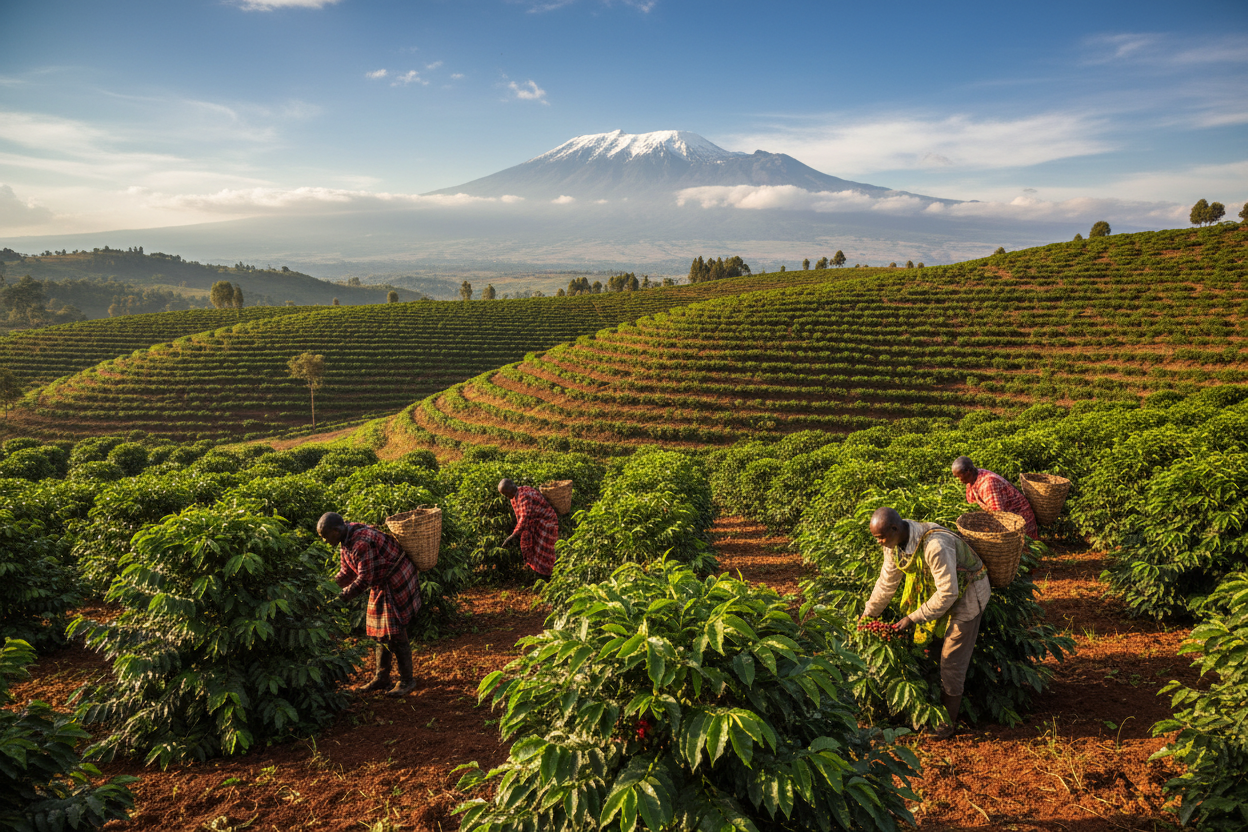
The Kenya Coffee Grading System: Understanding AA, AB, and PB Lots
Introduction: The Technical Powerhouse of East Africa
While Ethiopia is celebrated for its wild genetic mystery, Kenya is renowned as the most technically advanced coffee producer in the world. For the team at First Light Roasters, Kenyan coffee is the ultimate canvas for our motto: "Roasted for Clarity. Crafted at First Light." The transparency of a high grade Kenyan lot is unmatched, offering a sparkling acidity and a depth of fruit flavor that feels almost structured.
However, the Kenyan market can be confusing for even experienced drinkers. The labels AA, AB, and PB are not arbitrary quality scores; they are part of a sophisticated grading system based on bean size, shape, and density. To truly appreciate why we source these specific lots, one must understand the biology of the Kenyan coffee bean and the rigorous processing standards that define the region. This technical precision is what allows us to apply the high energy roasting science necessary to unlock the bean's full potential.
Technical Precision. Exceptional Clarity.
Experience the peak of the Rift Valley. View our single-origin offerings
I. Decoding the Grades: Size, Shape, and Screen
In Kenya, the grading of coffee is performed at the mills before the beans are sent to the Nairobi Coffee Exchange. This system primarily categorizes beans by their physical size using screens with holes measured in 64ths of an inch.
1.1 Kenya AA: The King of Screen Sizes
The AA grade is the most famous and highly sought after Kenyan grade. These beans are the largest in the harvest, passing through screen sizes 17 and 18.
- The Logic: Larger beans are generally believed to contain more essential oils and organic acids, which contribute to a more complex flavor profile.
- The First Light Standard: While size is a factor, we source AA lots specifically for their density, ensuring they can withstand our precision heat application to produce maximum clarity.
1.2 Kenya AB: The Flavorful Alternative
The AB grade represents a combination of screen sizes 15 and 16. While smaller than the AA beans, they often make up the bulk of a farm’s production.
- The Logic: Many tasters find that AB lots possess a more concentrated, intense acidity than their larger counterparts.
- The Roaster's Perspective: These beans require slightly different heat application in the roaster because their smaller surface area allows for faster thermal penetration.
1.3 Kenya PB (Peaberry): The Biological Mutation
The Peaberry is a natural mutation where only one seed develops inside the coffee cherry instead of the usual two. This results in a small, round bean that looks like a pea.
- The Logic: It is widely believed that because the tree funnels all its nutrients into a single seed rather than two, the flavor becomes more concentrated.
- The Sensory Profile: Peaberries are often prized for having an exceptionally bright, lively acidity and a syrupy mouthfeel.
II. The Varietals: The Royalty of SL-28 and SL-34
The unique flavor of Kenyan coffee is largely dictated by the specific varieties developed by Scott Agricultural Laboratories (SL) in the 1930s.
2.1 SL-28: The Sensory Standard
SL-28 is the most celebrated variety in Kenya. It was bred for its drought resistance and its incredible cup quality, which is defined by a distinct blackcurrant and wine like acidity. At First Light, we view SL-28 as the benchmark for Kenyan clarity.
2.2 SL-34: The High Altitude Powerhouse
SL-34 is typically found at even higher elevations and is known for its resilience in heavy rainfall. It produces a heavy body and complex citrus notes, providing a sturdy foundation for the bright acidity of the SL-28.
Bigger Beans, Brighter Flavors.
Our Kenya AA lots represent the technical peak of the Rift Valley. Taste the double washed difference. View our single-origin offerings
III. The Kenya Process: Scientific Washing
What truly separates Kenyan coffee from any other origin is the "Double Wash" or "Kenya Process". This is arguably the most labor intensive and scientifically rigorous processing method in the coffee world.
3.1 The Double Fermentation
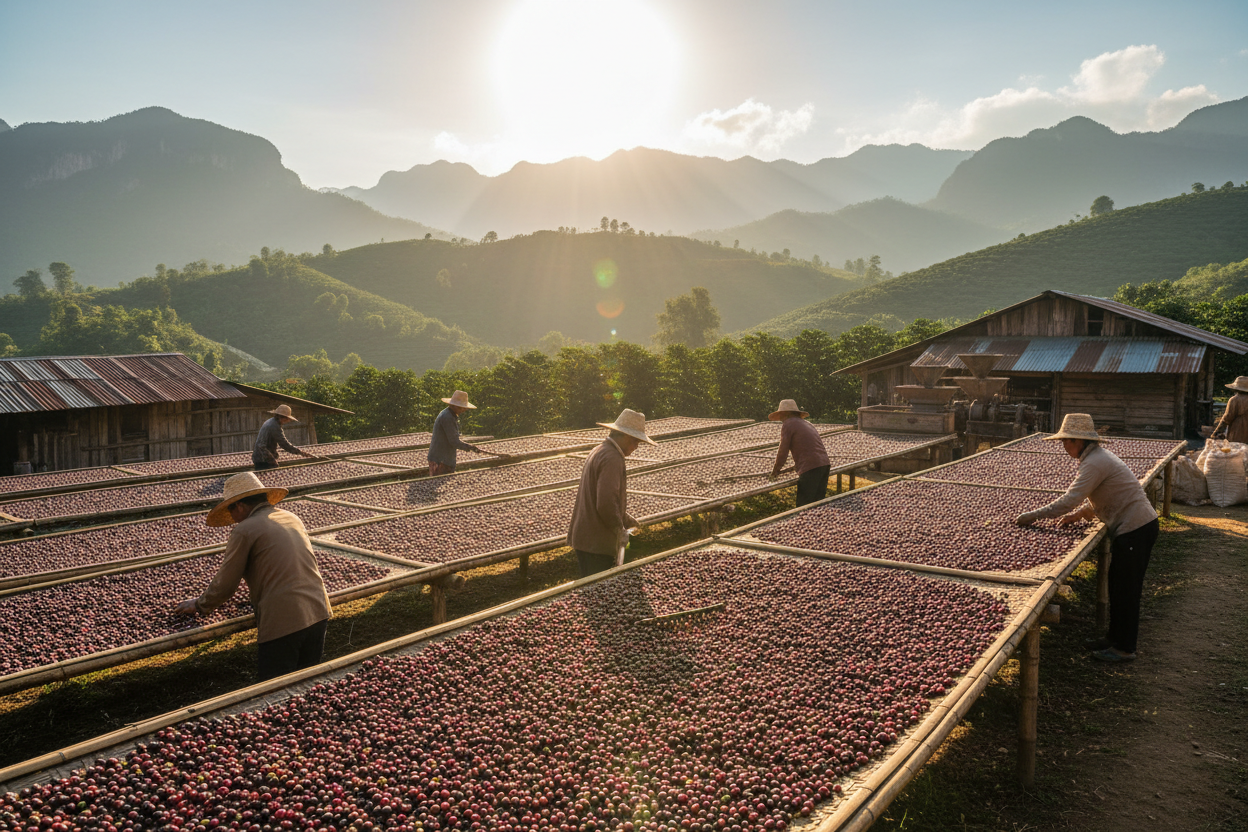
After being depulped, the beans undergo an initial fermentation that lasts between 12 and 24 hours to remove the mucilage. They are then washed and fermented a second time for another 12 to 24 hours.
The Result: This extra step ensures that every trace of fruit is removed, preventing any muddled flavors and leading to the pristine clarity we value at First Light. This process allows the unique minerals we discussed in our Rift Valley Manifesto to shine through with absolute transparency.
3.2 The Soaking Phase
After fermentation, the beans are soaked in clean water for up to 24 hours. This final soak allows the amino acids and proteins within the bean to stabilize, which is why Kenyan coffee is famous for its long shelf life and consistent flavor profile.
IV. Sourcing for Clarity: The Nairobi Coffee Exchange
Kenya utilizes one of the most transparent auction systems in the world, the Nairobi Coffee Exchange (NCE). This system allows roasters to trace a lot back to a specific factory or cooperative, ensuring that the premiums we pay go directly toward rewarding high quality farming.
4.1 The Role of Cooperatives
Most Kenyan coffee is produced by smallholder farmers who deliver their cherries to local washing stations, or factories, managed by cooperatives. Names like Nyeri, Kirinyaga, and Murang'a represent the regions where these cooperatives produce the world's most elite lots.
Conclusion: The Pinnacle of Precision
Kenyan coffee is the result of a perfect storm: volcanic soil, high altitudes, historic varietals, and the most rigorous processing standards in the industry. For First Light Roasters, these beans represent the highest level of clarity achievable in a cup.
When you see the Kenya AA or PB label on our bags, know that you are drinking the result of a scientific pursuit of excellence. We respect the 2025/2026 harvest by roasting these lots with absolute precision, ensuring that the bright, phosphoric soul of Kenya is captured in every sip. This is exceptional specialty coffee, crafted at first light, for a refined and full bodied experience consistently delivered on a global scale.
Ready to experience the brightness?
Roasted for clarity, delivered fresh to your door. View our single-origin offerings
FAQ: Understanding Kenyan Quality
Does an AA grade mean the coffee is better than an AB?
Not necessarily. AA refers to the screen size, the largest beans. While larger beans often have more flavor complexity, many AB lots are intensely bright and prized for their unique profiles.
What makes Kenyan Peaberry so special?
Peaberry is a natural mutation where one bean grows in a cherry instead of two. It is prized for its round shape, which allows for a very even roast, and its concentrated, lively flavor profile.
What is the SL-28 variety?
SL-28 is a historic variety developed in Kenya known for its exceptional cup quality, characterized by vibrant acidity and notes of blackcurrant.
Why is Kenyan coffee more expensive?
Kenyan coffee undergoes a labor intensive double fermentation and soaking process that requires significant water and care. Additionally, the transparent auction system ensures farmers are paid a premium for high quality lots.
How should I brew Kenya AA coffee?
To honor the technical precision of the bean, we recommend a pour over method like the V60 with a paper filter. Use a 1:16 ratio and water at 205°F to extract the dense sugars and sparkling phosphoric acidity.
What is phosphoric acidity?
Phosphoric acidity is a unique, sparkling sensation absorbed from volcanic soil that is particularly prominent in high quality Kenyan lots.
Is all Kenyan coffee washed?
The vast majority of specialty Kenyan coffee is washed or double washed. However, some producers are beginning to experiment with natural processing to create heavier, fruitier profiles for modern palates.

Leave a comment
This site is protected by hCaptcha and the hCaptcha Privacy Policy and Terms of Service apply.