

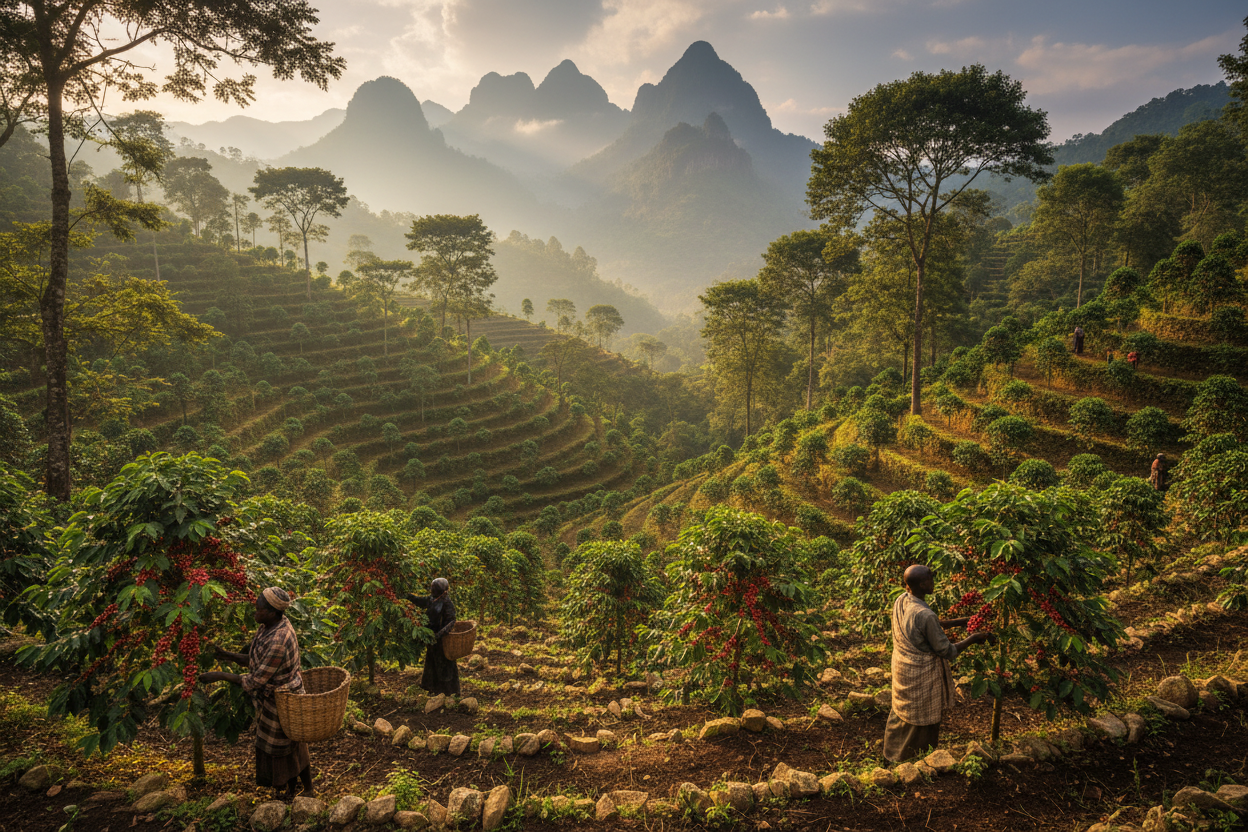
Ethiopia: A Deep Dive into the Genetic Birthplace of Arabica Coffee
Introduction: The Holy Grail of Specialty Coffee
In the global landscape of specialty coffee, every origin has a story, but only one has a soul that stretches back over a thousand years. While the rest of the world relies on human bred cultivars, Ethiopia remains the only place on Earth where coffee grows wild in its natural habitat. For the team at First Light Roasters, Ethiopia is not just an origin: it is the ultimate expression of our motto, "Roasted for Clarity. Crafted at First Light."
When we source Ethiopian lots, we are dealing with a genetic goldmine. These beans offer a sensory spectrum that ranges from delicate jasmine and bergamot to explosive stone fruits and deep berry jams. However, to truly appreciate the cup, one must understand the complex production systems, the mystery of the heirloom label, and the historic shifts currently defining the 2025/2026 harvest. This pursuit of flavor is inextricably linked to the unique geology we detailed in our Rift Valley Manifesto, which provides the mineral foundation for these ancient varieties.
The Holy Grail is Waiting
Experience the billion-year legacy of Ethiopia. View our single-origin offerings
I. The Genetic Goldmine: Decoding the Heirloom Label
When you look at a bag of specialty coffee from South America, you will often see a specific varietal listed, such as Bourbon, Caturra, or Geisha. However, most high end Ethiopian coffee is simply labeled as "Heirloom." This is not a lack of detail: it is a testament to the staggering biological diversity of the region.
1.1 The Landrace Advantage
Ethiopia is home to an estimated 6,000 to 15,000 distinct coffee varieties, the vast majority of which have never been formally classified by botanists. These are known as landrace varieties: non-hybrid, open pollinated strains that have adapted to their specific microclimates over centuries.
At First Light, we view this diversity as a natural insurance policy. While monocultures in other parts of the world are susceptible to disease and climate shifts, Ethiopia’s forests remain resilient. This genetic complexity is what creates the "layered" flavor profile found in our Ethiopian lots, where a single sip can reveal multiple stages of fruit and floral notes.
1.2 The JARC Varieties
While many lots are mixed heirlooms, the Jimma Agricultural Research Center (JARC) has worked to identify and distribute specific high performing varieties to farmers. These selections, often given numerical designations or local names, are chosen for their resistance to coffee berry disease and their exceptional cup quality. When we find a lot that consists entirely of a specific JARC selection, the clarity of the flavor profile is often even more pronounced, rewarding our technical roasting approach.
II. The Four Ethiopian Coffee Production Systems
To understand the quality of the bean, you must understand where it grew. Ethiopia utilizes four distinct production systems, each contributing differently to the global specialty market.
2.1 Forest Coffee
This is coffee in its purest form, growing wild under the natural canopy of the southwestern Ethiopian forests. These trees have high genetic diversity but typically offer lower yields. The flavor is often "wild" and earthy, representing the ancient origins of the plant.
2.2 Semi Forest Coffee
In this system, farmers manage the forest by thinning the canopy to allow more light and removing competing undergrowth. This balances the resilience of the forest with higher productivity, creating a bridge between the wild and the cultivated.
2.3 Garden Coffee
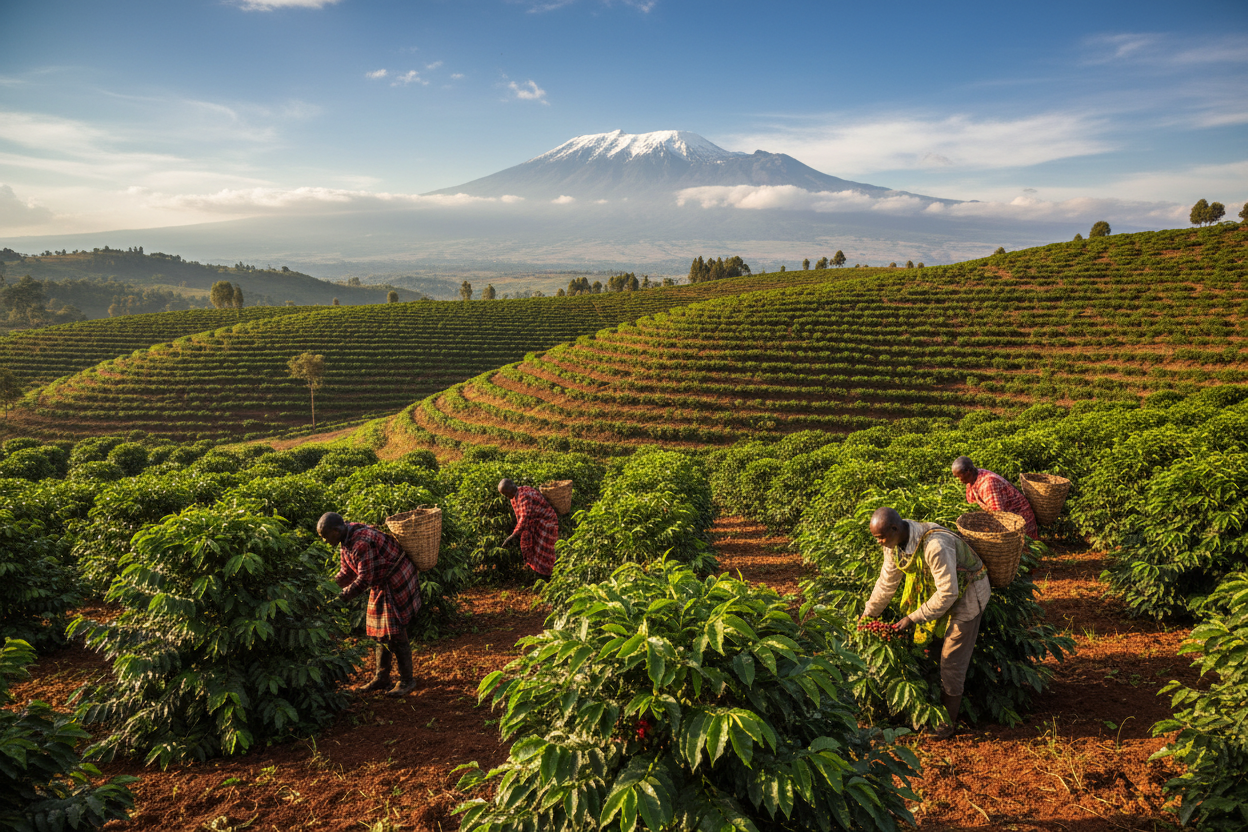
This is the backbone of the specialty industry. Most of the high quality Yirgacheffe and Sidama lots we roast are Garden Coffees. They are grown by smallholder farmers in their backyards, often alongside food crops like enset (false banana). These trees receive individual attention and organic fertilization, leading to the highly uniform and flavor dense cherries that we seek out for our Roasted for Clarity standard.
2.4 Plantation Coffee
These are larger, state owned or private estates that utilize more modern agricultural practices. While they offer higher volume and consistency, they often lack the extreme genetic diversity found in the smallholder garden systems.
Bring the Birthplace Home
From the jasmine gardens of Yirgacheffe to the fruit-bombs of Guji, experience the 2026 harvest. View our single-origin offerings
III. Regional Deep Dives: A Map of Flavor
The Great Rift Valley splits Ethiopia into distinct growing regions, each defined by its own unique terroir and chemical signature.
3.1 Yirgacheffe: The Floral Icon
Located within the Sidamo region, Yirgacheffe is world famous for its washed coffees. Because of the high altitudes, often 1,900m to 2,200m, these beans are incredibly dense.
- The Profile: High clarity, tea like body, and intense aromatics of jasmine and bergamot.
- The Roaster's Challenge: These beans require a light touch. Roasting even a few seconds too long can destroy the delicate floral esters that make Yirgacheffe the gold standard for brightness.
3.2 Guji: The Fruit Explosion
Guji has emerged as a powerhouse for both washed and natural processed coffees.
- The Profile: Known for stone fruit notes like peach and apricot, often accompanied by a creamy mouthfeel and a vibrant malic acidity.
- The Clarity Factor: Our Guji lots are chosen for their clean fruit notes, ensuring that the sweetness never becomes boozy or over fermented.
3.3 Sidama: Balanced Complexity
Sidama coffees offer a wide range of profiles due to the vastness of the region.
- The Profile: Typically more full bodied than Yirgacheffe, with notes of red berry, spice, and a crisp citric acidity.
- The First Light Standard: We source Sidama lots that showcase a structured balance between body and brightness, making them ideal for both pour over and modern espresso.
IV. The 2025/2026 Ethiopia Harvest: A Historic Year
The current season is one of the most significant in recent memory, defined by a massive increase in volume but complicated by historic pricing shifts.
4.1 A Bumper Crop
Ethiopia is projected to produce a record 11.6 million bags this season, an increase of roughly 500,000 bags over the previous year. This is largely due to the maturation of trees from a massive replanting project that updated over 450,000 hectares of coffee land with high yield varieties.
4.2 The Pricing and Processing Shift
Despite the high volume, the 2025/2026 harvest has faced significant logistical hurdles.
- Cherry Price Surge: Cherry prices reached historic highs of up to 250 ETB/kg.
- The Rise of Naturals: Because the cost of selling to washing stations was so high, many farmers chose to dry their cherries at home as Naturals.
- Scarcity of Washed Coffee: For the clarity seeking roaster, this means high quality Washed Ethiopian coffee is in tighter supply this year, making our early sourcing of these lots even more critical.
V. Roasting for Clarity: Honoring Ancient Genetics
At First Light Roasters, we treat Ethiopian heirloom beans with the reverence they deserve. Roasting these beans is not about imposing our will on them: it is about revealing what is already there. As detailed in our guide to the science of brightness, the technical levers we use are designed to protect the fragile chemistry of these landraces.
5.1 Heat Application for Heirlooms
Because Ethiopian lots are mixed heirlooms, the beans often vary slightly in size and density. This requires a roaster with exceptional control. We use a high energy start to penetrate the dense high altitude seeds, but we pull back the heat significantly before the first crack to ensure we don't bake away the floral volatile compounds.
5.2 The Agtron of Clarity
We typically roast our Ethiopian lots to an Agtron 95-85 range. This is a light roast that maximizes the floral aromatics. If you roast these beans into the medium or dark territory, the sugars caramelize and mask the jasmine and citrus with generic caramel notes, a practice we strictly avoid at First Light.
Conclusion: Bringing the First Light of Ethiopia to Your Cup
Ethiopia is the birthplace of the coffee we love, and it remains the pinnacle of genetic complexity in the specialty world. From the wild forests of Kaffa to the jasmine scented gardens of Yirgacheffe, every bag of Ethiopian coffee is a link to a thousand year old tradition of excellence.
At First Light Roasters, our goal is to bring that history into your kitchen with absolute clarity. We respect the 2025/2026 harvest by sourcing only the cleanest, most vibrant lots, ensuring that the ancient soul of Ethiopia is never lost in the roast. This is exceptional specialty coffee, crafted at first light, for a refined and full bodied experience that consistently delivers on the global scale.
Experience the First Light Standard
Ready to experience the brightness? View our single-origin offerings
Roasted for clarity, delivered fresh to your door.
VI. FAQ: Navigating the Ethiopian Coffee Experience
Why is Ethiopian coffee called "Heirloom"? Heirloom is a catch all term for the thousands of wild landrace varieties that have grown in Ethiopia for centuries. Unlike the specific cultivars found in other countries, these varieties are genetically diverse and unique to their specific forest or garden.
What is the difference between Washed and Natural Ethiopian coffee? Washed coffees are depulped and fermented in water, which results in a cleaner, tea like cup with high clarity and floral notes. Natural coffees are dried with the fruit still on the bean, leading to a heavier body and explosive fruit flavors like blueberry or strawberry.
Why is the 2025/2026 harvest significant? This season has seen a record breaking yield of 11.6 million bags due to major tree rejuvenation projects. However, historic highs in cherry prices have led to a shift toward natural processing among smallholders.
How should I brew Ethiopian coffee for the best clarity? We recommend a pour over method (like the V60) using a paper filter. Use a 1:16 ratio and a water temperature of 205°F to ensure you extract the dense sugars without burning off the delicate aromatics.
Which region produces the most "bright" coffee? Yirgacheffe is traditionally known as the brightest region, famous for its sparkling citric acidity and tea like transparency.
What are JARC varieties? JARC stands for the Jimma Agricultural Research Center. These are specific varieties selected for their resilience and high cup quality, often helping to stabilize yields for farmers in the face of climate change.
Why are Ethiopian beans often smaller than other beans? The high altitude and slow maturation of the Rift Valley create smaller, denser seeds. While they are smaller, they are packed with a higher concentration of sugars and acids than larger, lowland beans.


Leave a comment
This site is protected by hCaptcha and the hCaptcha Privacy Policy and Terms of Service apply.