The Ethics of Coffee Sourcing in 2026: Transparency as Trust | First Light Roasters
Introduction: The Era of Evidence-Based Ethics
In the specialty coffee landscape of 2026, transparency is no longer a marketing claim: it is a non-negotiable requirement for doing business. We have moved past the era of vague sustainability slogans and into a period of evidence-based ethics, where consumers demand verified environmental and social impact for every dollar spent. At First Light Roasters, our motto, "Roasted for Clarity. Crafted at First Light," extends beyond the flavor profile of the bean and into the very architecture of our supply chain.
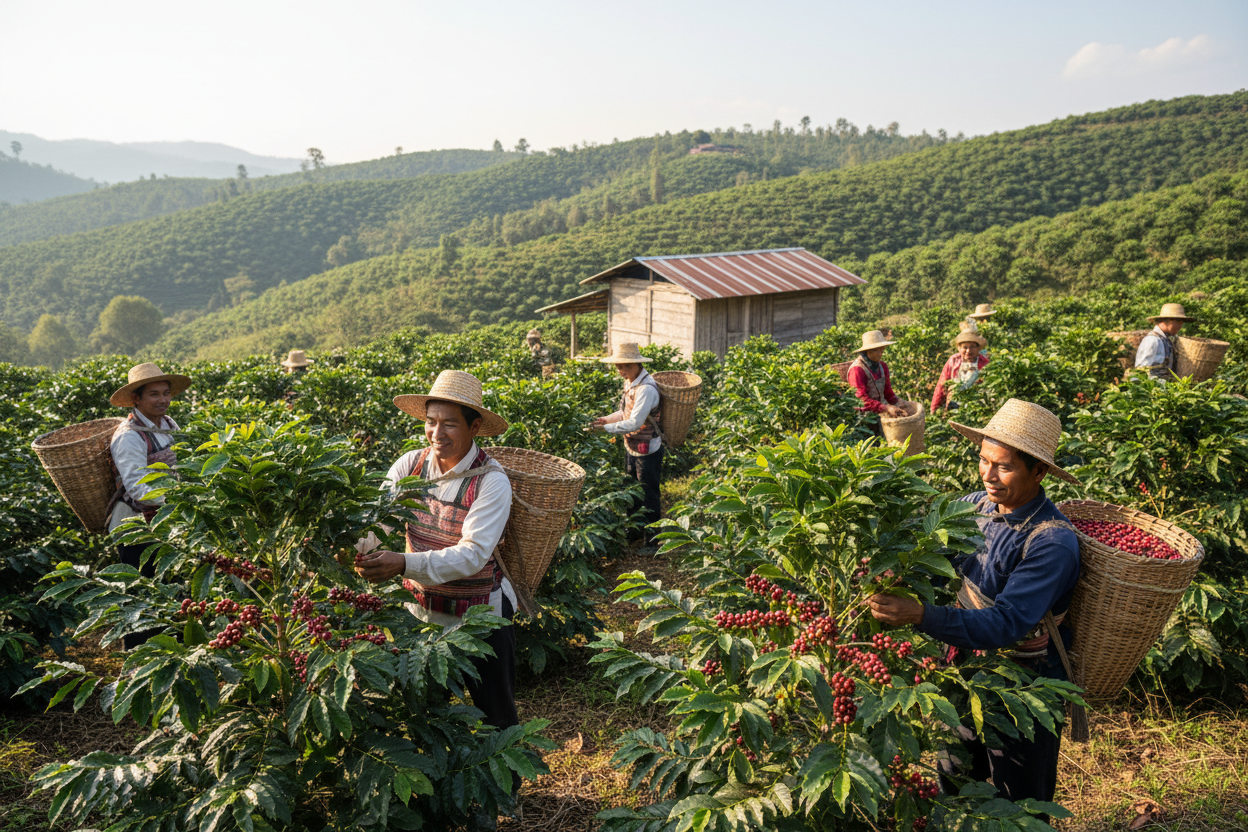
True clarity in coffee means being able to trace a single bag back to the specific hillside in the Great Rift Valley where it was grown, knowing the exact name of the farmer, and verifying that they were paid a living wage. In this comprehensive guide, we explore the rise of blockchain traceability, the difference between direct trade and fair trade in 2026, and why "regenerative agriculture" is replacing "sustainability" as the new gold standard for ethical sourcing.
Support Sustainable Quality
Our sourcing directly supports the farmers of the Rift Valley. View our single-origin offerings
I. The 2026 Coffee Scorecard: Measuring What Matters
Coffee is one of the most widely traded commodities on Earth, yet its history is too often linked with poverty and environmental destruction. To combat this, the 2026 industry has adopted more rigorous evaluation frameworks like the Coffee Scorecard, which evaluates brands on eight key areas of accountability.
1.1 Traceability and Transparency
The guiding principle of 2026 sourcing is simple: if you can't see it, you can't fix it. Traceability allows us to identify and address systemic issues: from labor rights to deforestation: at the source. For Ethiopian garden coffees, this means moving away from massive cooperatives and toward individual micro-lot tracking where the unique "story" of the farm remains intact.
1.2 Gender Equality and Human Rights
Empowering women is now recognized as a vital pillar for a sustainable coffee sector. Sourcing ethics in 2026 prioritize "Gender Equity" lots, where women have direct control over the farm's financial resources. This helps break the cycle of poverty that leads to the use of forced or child labor in marginalized regions.
II. Technology as the Truth-Teller: Blockchain and QR Tracking
Traditional paper-based supply chains are vulnerable to fraud and information loss. In 2026, technology solutions have revolutionized coffee traceability by creating an immutable digital ledger from farm to cup.
2.1 Blockchain: The Decentralized Ledger
Blockchain technology allows for secure, tamper-proof record-keeping of every step in the supply chain. Each transaction is logged and validated by multiple participants, ensuring that the premiums we pay at First Light actually reach the farmer. This technology eliminates the need for expensive intermediaries and builds trust in an increasingly informed market.
2.2 QR Code Engagement
Simple QR codes on our packaging now provide you with instant access to the farm location, the date of harvest, and even the "Soil Health Score" of that specific lot. This transparency provides confidence in the technical clarity and origin-focused quality we promise.
III. Sourcing Models: Fair Trade vs. Direct Trade in 2026
While both models aim to make coffee more equitable, they achieve this through fundamentally different approaches.
3.1 Fair Trade: The Safety Net
Fair Trade acts as a certification system that guarantees farmers a minimum price, protecting them when global commodity markets crash. It provides community development funds for schools and healthcare but involves high costs for farmers to maintain their certification status.
3.2 Direct Trade: The Partnership
Direct Trade is the relationship-based model we favor at First Light Roasters. We visit farms personally, cupping the coffee and negotiating prices directly with the producers. This allows us to pay premiums that are often 25% or more above the Fair Trade price, rewarding exceptional quality and fostering long-term resilience.
Roasted for the Connoisseur
Experience the peak of ethical precision. View our single-origin offerings
IV. From Sustainability to Regeneration
For years, "Sustainable Coffee" was the goal: a promise to do no harm. In 2026, that is no longer enough: we must actively heal the land. This is the era of Regenerative Sourcing.
4.1 Restoring Soil Microbiology
Regenerative systems replace synthetic fertilizers with composting, cover cropping, and agroforestry. Healthy soils teeming with beneficial fungi allow coffee plants to absorb minerals more efficiently, leading to the higher acidity clarity and deep body found in our premium Kenyan lots.
4.2 Carbon Sequestration and Biodiversity
Coffee grown using agroforestry methods can capture twice the carbon and support up to 19 times the biodiversity of monocultures. These biodiverse ecosystems act as a microclimate buffer, protecting natural processed cherries from the heatwaves and erratic rains that now characterize the Rift Valley operating environment.
V. The Economics of Responsibility: Why Cheap Coffee Costs More
We are not going back to "cheap coffee". Pricing in 2026 now reflects the true cost of producing coffee responsibly: accounting for labor shortages, climate risk, and the living income required for farmers to stay in business.
5.1 Stabilizing the Supply Chain
Responsible sourcing includes long-term contracts that reduce farmer risk. By committing to buy entire harvests at stable, premium prices, we ensure that the world's most precious specialty beans remain available even as climate change makes them scarcer.
5.2 Authenticity Wins
As prices rise, consumers are turning away from large, generic brands and toward independent roasters they know and trust. Transparency builds pricing power: when you see the evidence of our work, you understand the value behind every cup.
Conclusion: Sourcing with Intention
The future of coffee hinges on ethical sourcing as the industry faces its most significant environmental and economic challenges in a generation. At First Light Roasters, we believe that understanding the origin of your coffee bridges the gap between simple enjoyment and global responsibility.
By embracing blockchain technology, direct trade partnerships, and regenerative agriculture, we curate a billion-year legacy that is better for the people and the planet. This is exceptional specialty coffee, crafted at first light, for a refined and full-bodied experience consistently delivered on a global scale. Join us in the pursuit of clarity: ethical, transparent, and undeniably superior.
Ready to experience the brightness?
Roasted for clarity, delivered fresh to your door. View our single-origin offerings
FAQ: Understanding Ethical Sourcing
What does "living income" mean for coffee farmers?
A living income is a benchmark that ensures farmers and workers earn enough to cover essential costs: like food, housing, healthcare, and education: while allowing them to invest back into their farms for a sustainable future.
How does blockchain help me trust my coffee?
Blockchain creates a permanent, tamper-proof record of every hand that touched your coffee beans. By scanning a QR code, you can verify everything: from farm coordinates to processing dates: without relying solely on marketing claims.
Why is regenerative agriculture better than just "sustainable"?
Sustainability aims to maintain the current state, while regenerative agriculture actively repairs and restores the land by focusing on soil health, biodiversity, and carbon sequestration.
Does "Direct Trade" have a formal certification?
No: Direct Trade is a trust-based model that relies on the roaster's reputation and transparency. We provide detailed stories and financial disclosures to prove our commitments.
Why has coffee become more expensive in 2026?
Current prices reflect the "true cost" of coffee: including climate adaptation strategies, rising labor costs, and the investment needed to secure supply lines in a volatile global market.
What is agroforestry?
Agroforestry is the practice of growing coffee under a diverse canopy of trees. This method captures twice the carbon, supports massive biodiversity, and creates a microclimate that makes coffee plants more resilient to heatwaves.
How can I verify if a coffee brand is actually ethical?
Look for origin transparency: including farm names and locations: and check if the brand provides verified social and environmental impact evidence, such as the Coffee Scorecard rating.

Leave a comment
This site is protected by hCaptcha and the hCaptcha Privacy Policy and Terms of Service apply.