

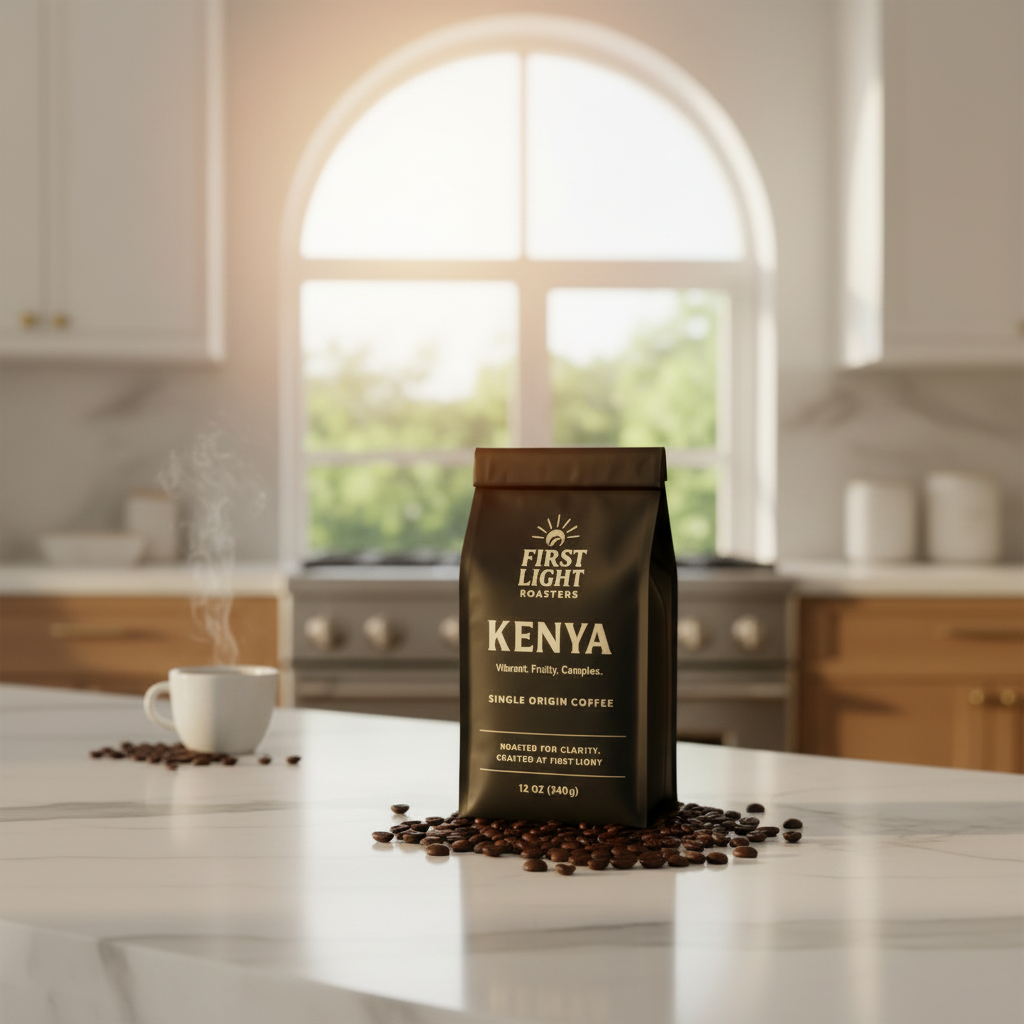
How to Brew Kenyan Coffee for Maximum Flavor — 4 Methods Compared
Kenyan coffee is not a forgiving origin, not because it is technically demanding to brew, but because its defining characteristics are vivid enough to show up clearly whether a brew has been done well or poorly. The bright acidity, layered fruit notes, and clean finish that make Kenya AA exceptional will shine when the brew is right. They will retreat, flatten, or turn harsh when the brew is wrong. This makes Kenyan coffee an excellent teacher.
At First Light Roasters, we work with a coffee, our Kenya AA, whose quality justifies treating brew method as a meaningful decision rather than a matter of convenience. The method you choose will significantly shape how much of the coffee's potential reaches your cup. Not every method is equally suited to Kenya's flavor profile, and understanding the tradeoffs helps you choose the right approach for your equipment, time, and preferences.
This post compares four brewing methods for Kenyan coffee; pour-over, AeroPress, French press, and espresso. With specific techniques for each and an honest assessment of what each method does well and where it falls short. Our personal preference at First Light is the pour-over, but we want you to make the best cup you can with whatever equipment you have.
Method 1: Pour-Over — The Clarity Champion
Pour-over is our top recommendation for Kenya AA and the method we use for all our in-house tasting and quality evaluation. The reasons are well-documented in our full pour-over protocol post, but the short version is this: pour-over produces the clearest, most transparent cup of any common brew method. It shows the fruit, the acidity, the terroir, and the roast character in their most distinct and separated form.
For Kenya AA, use a V60 or Kalita Wave. Use a 1:15 ratio (20g coffee, 300g water at 93°C). Bloom for 30 seconds, complete the pour by 2:30, total brew time 3:00 to 3:30. Grind medium-fine, consistent burr grinder essential.
The result: blackcurrant and red apple on entry, brown sugar and dark chocolate mid-palate, clean citric finish that lingers. The brightness is vivid but balanced. Body is medium. This is the cup that shows you what Kenya actually is.
Limitation: pour-over is the most technique-dependent method. Inconsistent grind, imprecise temperature, or sloppy pouring technique will produce a noticeably inferior result. It rewards those who pay attention.
Method 2: AeroPress — Concentrated Complexity
The AeroPress is an underappreciated method for high-quality single-origin coffee, and it works beautifully with Kenyan coffee when used with an inverted setup and a longer steep time. The AeroPress's ability to brew under slight pressure produces a cup with more body than pour-over, making it an excellent option for those who want Kenya's flavor complexity with more tactile presence in the mouth.
For Kenya AA on the AeroPress: use the inverted method, 15g of coffee, 225g of water at 90 to 92°C (slightly lower than pour-over to prevent over-extraction under pressure). Stir for 10 seconds after adding water, steep for 90 to 120 seconds, press slowly over 30 to 40 seconds. Total preparation time is about 3 minutes.
The lower temperature and pressure combination extracts differently than pour-over: you get the fruit and brightness of Kenya but with a slightly heavier, more chocolatey mid-palate and less of the effervescent finish. It is an excellent daily driver cup for Kenya AA — quick, forgiving of minor technique variations, and rewarding.
The AeroPress is also the best method for travel. If you are taking First Light Kenya AA on the road, an AeroPress fits in a carry-on and produces results that are dramatically better than any hotel coffee option.
Method 3: French Press — Body Without Brightness
The French press is a legitimate and beloved brewing method, but it is not ideal for Kenyan coffee's specific character. The immersion brewing method and the metal filter that characterizes French press extraction produce a cup with heavy body, full mouthfeel, and the presence of coffee oils and fine particles that a paper filter removes. For origins where body and richness are defining characteristics — Sumatran wet-hulled coffees, natural Ethiopian Yirgacheffes, Brazilian naturals — this is a feature, not a limitation.
For Kenyan coffee, however, the French press method suppresses exactly what makes Kenya great. The heavy body and coffee oils in the cup create a density that mutes the bright citric and malic acidity that defines the origin. The blackcurrant and fruit notes are still present but seem muffled. The clean finish becomes fuller and less crisp. The result is a perfectly good cup of coffee that could have come from several different origins — whereas a Kenya pour-over is unmistakably Kenya.
If French press is your only option, use these parameters for the best possible result: 15g of coffee, 240g of water at 93°C, steep for 4 minutes, plunge slowly. Use a slightly coarser grind than you might for other coffees to prevent the longer steep time from over-extracting the bitter compounds that are more present in this method. The cup will be good. It just won't be what Kenya is capable of in the right vessel.
Method 4: Espresso — Unexpected Brilliance
Espresso is the most technically demanding method for Kenyan coffee and the one with the widest gap between done-well and done-poorly results. Most espresso machines and most espresso roasting conventions are calibrated for lower-acidity, heavier-bodied origins — Brazilians, Colombians, blends built around body and crema. Kenya AA pushed through an espresso machine at standard espresso parameters produces a cup that is sharply acidic to the point of discomfort for many drinkers.
But done correctly, Kenya AA espresso is extraordinary. The key adjustments: use a slightly higher dose (18 to 19g for a double), slightly lower brewing temperature (91 to 92°C instead of the standard 93 to 94°C), and a longer pre-infusion period (5 to 8 seconds at reduced pressure before full extraction). The lower temperature reduces acidity at the extraction stage. The higher dose increases body. The pre-infusion ensures even saturation before full pressure, which prevents the channeling that Kenya's dense beans are prone to.
The result, when you dial it in, is a 35 to 40 second extraction that produces a shot of bright, complex, fruit-forward espresso unlike anything you get from a standard espresso blend — blackcurrant intensity, dark chocolate base, a finish that lingers for a full minute. It requires a machine with temperature stability and pressure control to achieve. For those with appropriate equipment and the patience to dial in, it is one of the most remarkable coffee experiences available.
Choosing the Right Method for Your Situation
The best brewing method for Kenyan coffee is ultimately the one you will use consistently and with attention. A carefully brewed French press will produce a better cup than a carelessly brewed pour-over every time. Method is a multiplier, not a guarantee.
That said, our recommendations in order: pour-over for the most expressive, origin-transparent cup; AeroPress for an excellent daily driver with slightly more body; espresso for adventurous drinkers with appropriate equipment; French press for those with no other options who still want something better than average.
Whatever method you choose, the variables that matter most are the same: fresh coffee (4 to 14 days post-roast), consistent grind, correct temperature, appropriate ratio, and consistent technique. Get those right and Kenya AA will reward you regardless of the vessel.
Troubleshooting Common Kenya Brew Problems
Because Kenya's vivid acidity makes problems audible in the cup, here is a practical diagnostic for the most common issues.
Sour, thin, weak — under-extraction. Common causes: water below 90°C, grind too coarse, or coffee brewed before 4-day degassing window. Grind finer and confirm temperature. For AeroPress, extend steep to 120 seconds.
Bitter, harsh, heavy — over-extraction. Grind too fine, water too hot, brew time too long. Coarsen the grind first. If bitterness comes with papery or astringent aftertaste, rinse your paper filter with hot water before brewing.
Flat and lifeless despite correct parameters — stale coffee (over 3 weeks post-roast) or water too soft. Test your water TDS; below 75 ppm, minerals that drive extraction are insufficient. Switch to lightly filtered tap water or add a mineral supplement blend.
Simultaneously sour AND bitter — grind inconsistency. Fine particles over-extract (bitter); coarse particles under-extract (sour). No temperature or ratio adjustment resolves this. Only a consistent burr grinder does.
Sharp, unpleasant acidity — Kenya's brightness without adequate sweetness balance. Drop water temperature 1 to 2°C, richen the ratio toward 1:14, or confirm the coffee is past day 4 post-roast. Very fresh beans (day 1 to 2) often read as sharply acidic before adequate CO2 has off-gassed.
Cold brew is worth a brief mention here too. Kenya AA cold brew — 1:8 ratio, coarse grind, 18 to 24 hours at refrigerator temperature — produces a surprisingly fruit-forward concentrate. The slow, cold extraction pulls the fruit and acid notes with less bitterness than hot brewing, and the result over ice is one of the more refreshing coffee experiences available. The bright acidity that can feel aggressive hot becomes clean and refreshing cold. It is worth trying at least once.
Kenyan coffee is worth brewing well, and brewing well requires understanding your method. At First Light, we are always happy to talk through brew technique — for our coffees or any other specialty origin you are working with.

Leave a comment
This site is protected by hCaptcha and the hCaptcha Privacy Policy and Terms of Service apply.