Behind every bag of specialty Kenyan coffee lies a trading system that is unlike anything else in the coffee world. While most coffee origins sell through direct trade networks, export companies, or commodity brokers — opaque systems where traceability is often limited to the country level — Kenya has maintained a centralized auction system since the colonial era. The Nairobi Coffee Exchange (NCE) governs the vast majority of Kenyan green coffee transactions, and its structure has shaped the traceability, pricing, and quality incentives of Kenyan coffee for generations.
Understanding the Nairobi auction system is not just trivia for coffee professionals. It explains why Kenyan coffee from reputable roasters is more traceable than coffee from most other origins. It explains the premium pricing that Kenyan coffee commands. And it illuminates the specific economic mechanisms that reward quality at origin — mechanisms that, when functioning well, create real incentives for farmers to invest in better cherry selection and processing.
For First Light, understanding and working within the NCE system is part of what it means to source Kenyan coffee responsibly. We do not pretend the auction system is perfect — no commodity trading system is — but we engage with it transparently and actively work with partners who use it to achieve the traceability and quality documentation that our sourcing standards require.
The History of the Nairobi Coffee Exchange
The Nairobi Coffee Exchange was established during the British colonial period in Kenya, initially as a mechanism for organizing and controlling the export of coffee from what was then a significant colonial agricultural commodity. The early auction system was designed to concentrate buying power in Nairobi, simplify export logistics, and create a documented trading record that facilitated financing and export documentation.
Post-independence Kenya retained the auction structure, recognizing that it provided both practical and quality-incentive benefits that would be difficult to replace with a decentralized trading system. The cooperative structure that developed alongside the auction — with smallholder farmers organized into county-level cooperatives that process and sell their cherry collectively — complemented the auction by creating organized supply units of sufficient scale to participate meaningfully in the exchange.
For much of the 20th century, the NCE was a traditional, physical auction conducted weekly at the Exchange building in Nairobi. Registered buyers — local agents representing international roasters — attended in person, bid on lots displayed by grade and washing station, and completed transactions through documented sales records. The system was functional but physically constrained and occasionally inefficient.
In January 2026, the Nairobi Coffee Exchange launched a fully digitized auction platform, a development that has significantly increased transparency and participation. International roasters can now access lot information, cupping scores, and bidding interfaces directly, reducing the intermediary layer between Kenyan washing stations and global buyers. Participation in the exchange reportedly increased by 34 percent in the first quarter after the digital platform launch. This modernization represents a meaningful structural improvement in how Kenyan coffee quality is recognized and compensated.
How the Auction System Works
Every week during the harvest and processing seasons, registered marketing agents deliver green coffee samples to the NCE on behalf of the cooperatives they represent. These samples — drawn from specific washing station lots, identified by grade, region, and lot number — are distributed to registered buyers for pre-auction cupping and evaluation.
Buyers cup the samples before the auction, assigning their own quality assessments and establishing the prices they are willing to bid. At the auction session itself (now conducted via the digital platform), buyers bid competitively for each lot. The lot goes to the highest bidder. Sale documentation is generated, and the transaction proceeds through licensed exporter to the international buyer.
The critical quality-incentive mechanism in this system is direct price feedback: lots that cup well generate competitive bidding and achieve premium prices; lots of lower quality receive fewer bids and lower prices. When this signal reaches the cooperative and, through the cooperative, the individual farmers who contributed to the lot, it creates a real financial incentive to improve cherry selection, picking quality, and processing care. The system is imperfect — information transmission through cooperative structures can be slow and uneven — but the incentive structure is sound in principle, and the evidence from the best-performing washing stations in Nyeri and Kirinyaga suggests that it functions effectively when cooperatives are well-managed.
Premium lots from the NCE can command prices two to five times the commodity floor, and truly exceptional microlots from documented high-quality stations can go higher. These prices flow back through the marketing agent, through the cooperative, and ultimately to the individual farmers who produced the cherry — providing income that can fund farm maintenance, tree replanting, and continued quality investment.
The Role of Marketing Agents and Cooperatives
The NCE system involves two intermediary layers between the farmer and the international buyer: cooperatives and marketing agents. Understanding their roles clarifies the traceability picture and helps explain both the system's strengths and its limitations.
Cooperatives are farmer-owned organizations that collect cherry from member farms, operate the central wet processing stations, and aggregate lots for sale. A cooperative serves as the quality-control and logistics organization for its member farmers: it sets cherry acceptance standards, manages fermentation and drying at the washing station, and assembles the dry parchment coffee into lots for delivery to the NCE. Cooperative governance quality varies significantly across Kenya, and the best cooperatives — the ones that consistently produce top-scoring lots — are characterized by strong management, transparent financial practices, and real accountability to farmer members.
Marketing agents are licensed intermediaries who manage the administrative and logistical aspects of the auction process on behalf of cooperatives. They deliver samples to the NCE, manage documentation, and facilitate the transaction process. Marketing agents have been a point of criticism in the Kenyan coffee system: at their worst, they act as opacity layers that reduce the price farmers receive while adding cost to buyers. At their best, they provide genuine logistics and documentation value in a complex regulatory environment.
First Light works to engage with Kenyan supply partners who navigate the NCE system with maximum transparency — cooperatives with strong governance and marketing agents who can provide full documentation of lot origin, washing station, and transaction history. The NCE's digital platform improvements have made this kind of documentation easier to obtain and verify, which we view as a meaningful improvement in the system.
Why Kenyan Coffee Is More Traceable Than Most Origins
The auction documentation structure — lot numbers tied to specific washing stations, cooperatives, grades, and processing dates — creates a paper trail that allows traceability to the washing-station level as a routine feature of every NCE transaction, not as an exceptional premium service. When First Light purchases a Nyeri AA lot through the NCE, the documentation includes: the cooperative name and registration number, the washing station identifier, the lot number and grade, the processing date range, and the cupping scores assigned by the NCE's official quality team.
This level of documentation is not available as standard practice in most other major coffee origins. Brazilian coffee, for example, is predominantly sold through regional cooperatives that aggregate lots from large numbers of farms without washing-station-level tracking. Indonesian coffee passes through multiple trader layers that typically obscure individual farm or processing station origin. Colombian coffee has made progress in traceability through initiatives like the Juan Valdez direct sourcing programs, but washing-station-level traceability is not the default for all Colombian purchases.
The NCE's traceability infrastructure means that when a specialty roaster claims to source from a specific county or washing station in Kenya, that claim can be independently verified through auction documentation. It is not merely a marketing assertion. This verifiability is one reason that serious specialty buyers value Kenyan coffee highly even at premium prices — the supply chain story is documented, not invented.
What This Means for First Light and Our Customers
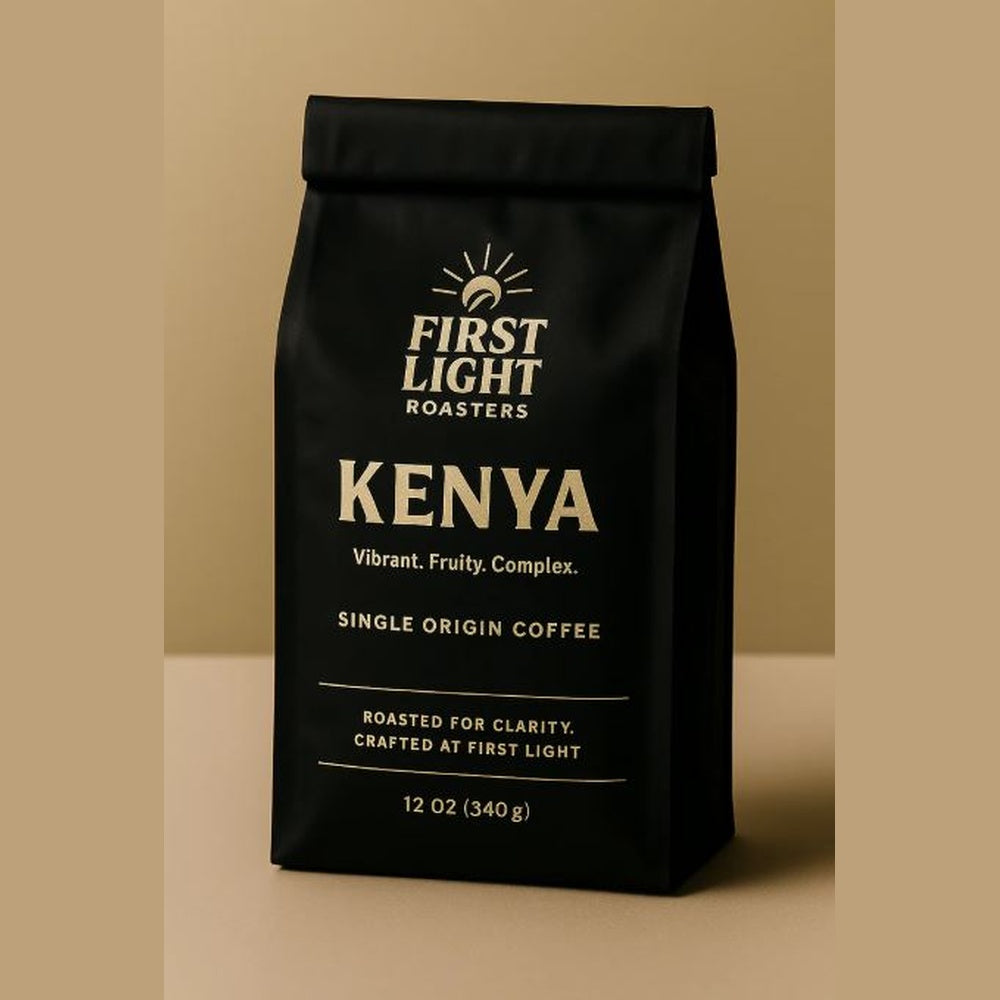
For First Light, the NCE system provides the documentation foundation that our sourcing transparency commitments require. When we tell you that your First Light Kenya AA comes from a specific cooperative in Nyeri, we are telling you something that is traceable through official exchange documentation, not something we inferred from broker descriptions.
We pay the NCE premium prices willingly because the auction system's quality-incentive mechanism is aligned with our own values. When competitive bidding at the NCE drives up prices for exceptional Nyeri lots, those price signals reach Kenyan farmers. They create real economic incentives to continue the investment in careful cherry selection, double-wash processing, and drying bed management that produces the quality we want to buy. Every premium price we pay at auction is, in a real sense, an investment in the continued production of the coffee that makes our Kenya AA program possible.
The NCE is not a perfect system, and the recent digital platform improvements represent work in progress rather than a fully solved problem. But it is a system with functioning quality incentives, meaningful traceability, and a structural commitment to transparency that we find genuinely supportive of the specialty coffee values we try to live out. We are glad to be buyers within it.
The Nairobi Coffee Exchange is more than a trading mechanism. It is the infrastructure that makes Kenyan coffee's traceability and quality incentives possible. Understanding it helps you understand why the cup in your hand is as good as it is and where your purchase price actually goes.