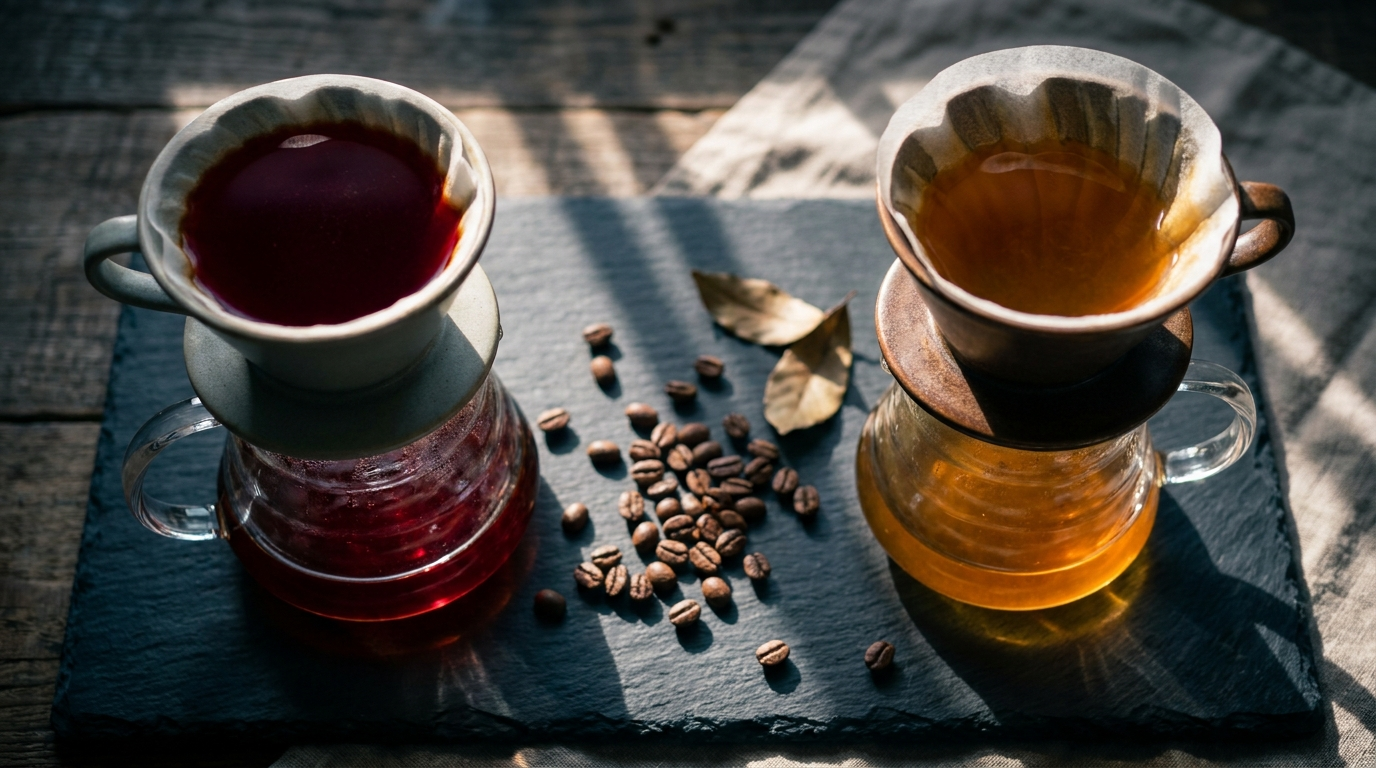
If you want a cup with structure, intensity, and wine-like fruit, buy Kenyan coffee. If you want something floral, delicate, and closer to fine tea, buy Ethiopian. That is the short answer to the Kenyan vs Ethiopian coffee question, and it holds even though the two countries share a border. The longer answer comes down to plant genetics, processing, and terroir, and it is worth understanding before you commit to a bag. We roast both at First Light, side by side, so this comparison comes from the roasting floor, not a spreadsheet.
In this article
- What is the difference between Kenyan and Ethiopian coffee?
- What does Kenyan coffee taste like?
- What does Ethiopian coffee taste like?
- Side by side
- Which is better for espresso, pour-over, or French press?
- Why we roast both the same way
- So which should you buy?
- FAQ
What Is the Difference Between Kenyan and Ethiopian Coffee?
The core difference is genetic. Ethiopia is the birthplace of arabica and grows thousands of heirloom varieties, most of them wild or semi-wild, which is why Ethiopian coffee tastes floral, fruit-driven, and different from region to region. Kenya took the opposite path: a small set of carefully selected varieties, led by SL28 and SL34, bred for cup quality and known for blackcurrant, grapefruit, and a structured, wine-like acidity. Ethiopia gives you diversity. Kenya gives you precision. Both produce some of the highest-scoring arabica on earth, so this is a choice of character, not quality.
Processing widens the gap. Nearly all specialty Kenyan coffee is washed, and most factories add an extended clean-water soak after fermentation. That extra step is a large part of why Kenyan cups taste so defined and transparent. Ethiopia washes beautifully too, but it also produces naturals that taste like a different drink entirely.

What Does Kenyan Coffee Taste Like?
Kenyan coffee is the most structured cup in Africa. Expect blackcurrant, citrus, and a bright, juicy acidity that reads like a dry red wine. There is a reason serious cuppers call Kenya the Queen of Coffee.
Our Kenya is a direct trade AA lot, the top screen size in Kenya's grading system, roasted light to medium to keep that structure intact. In the cup: blackcurrant, grapefruit, brown sugar. The acidity carries the fruit, and the brown sugar sweetness lands underneath it. If you have only had darker roasted Kenyan coffee, this will be a different experience. The clarity is the point.

Direct trade Kenya AA. Blackcurrant, grapefruit, brown sugar. Roasted light to medium for clarity.
Want the grading system decoded? We broke down what AA, AB, and PB actually mean in our guide to the Kenya coffee grading system.
What Does Ethiopian Coffee Taste Like?
Ethiopian coffee is where coffee began, and the cup still tastes like it answers to no one. Washed Ethiopian lots are floral and precise: jasmine, stone fruit, a tea-like body that finishes clean. Naturals swing fruitier and heavier, closer to berry preserves.
Our Ethiopia is a washed lot from the Guji zone in the south, picked at peak ripeness and roasted light to medium. In the cup: jasmine, peach, black tea. It is the Asl, the original, and it drinks like it. Delicate is the wrong word; this coffee is quiet the way confident things are quiet.

Washed Guji. Jasmine, peach, black tea. The original, roasted light to medium.
Kenyan vs Ethiopian Coffee: Side by Side
| Kenya | Ethiopia | |
|---|---|---|
| Signature notes | Blackcurrant, grapefruit, brown sugar | Jasmine, peach, black tea |
| Acidity | Bright, structured, wine-like | Crisp, delicate, citric |
| Body | Round, juicy | Tea-like, silky |
| Varieties | SL28, SL34: selected and documented | Heirloom: thousands of native varieties |
| Processing | Washed, with an extended soak | Washed or natural |
| Character in one word | Precision | Expression |
| First Light lot | Direct trade Kenya AA, from $22 | Washed Guji, from $21 |
Which Is Better for Espresso, Pour-Over, or French Press?
For pour-over and Chemex, both origins excel, and this is where we would start with either bag. The paper filter and slower extraction give the acidity room to articulate.
For espresso, Kenya takes it. That structured acidity concentrates into something vivid, and the blackcurrant turns almost syrupy under pressure. Ethiopian espresso is beautiful but polarizing; the florals can read sharp in a short shot.
For French press, Ethiopia's tea-like body suits the fuller, unfiltered style, though we would still grind coarse and keep the steep short to protect the finish.
For AeroPress, Ethiopia. The method flatters jasmine and peach the way little else does.

Why We Roast Both the Same Way
Most roasters push Kenya darker and keep Ethiopia light. We roast both light to medium, on purpose. When the roast level is held constant, everything you taste between the two bags is origin: the genetics, the soil, the processing. That is the cleanest comparison you can run at home, and it is the standard behind Roasted for Clarity.
This comparison is also personal. Sam's grandmother roasted wild Somali coffee before daybreak. Amal's grandfather farmed coffee in Ethiopia for life. First Light exists because of East African coffee, so when we say the Kenya vs Ethiopia question has no wrong answer, we mean it as family history, not marketing.
So Which Should You Buy?
Buy the Kenya if you drink coffee black and want intensity: wine-like fruit, structure, a cup that stands up and says something. It is also the pick if you pull espresso.
Buy the Ethiopia if you love aromatics: florals, stone fruit, a finish like good black tea. It is the pick for slow pour-over mornings and for anyone curious what coffee tasted like first.
Buy both if you want the single most instructive tasting in coffee. Brew them side by side, same method, same ratio. The difference between precision and expression will be sitting in front of you in two cups.
Frequently Asked Questions
Is Kenyan or Ethiopian coffee better for espresso?
Kenyan coffee, in most cases. Its structured, wine-like acidity concentrates well under pressure, and the blackcurrant character turns rich and syrupy in a shot. Ethiopian espresso can be stunning but its florals read sharp to some palates.
Which is more acidic, Kenyan or Ethiopian coffee?
Kenyan coffee has the more intense, structured acidity, often compared to dry red wine. Ethiopian coffee is also bright, but its acidity is more delicate and citric, softened by a tea-like body.
What does AA mean in Kenyan coffee?
AA is the top screen size in Kenya's grading system, reserved for the largest, densest beans of the harvest. Grade reflects size and density, not a taste score, but AA lots from good factories are consistently among Kenya's best cups.
Is Ethiopian coffee stronger than Kenyan coffee?
No, strength is set by your brew ratio, not the origin. In character, Kenyan coffee tastes more intense and Ethiopian more delicate, but caffeine and strength are in your hands, not the bag.
Why is Kenyan coffee so expensive?
Kenya produces a fraction of Ethiopia's volume and sells its best lots through a competitive auction system, so demand for top grades is fierce. You are paying for scarcity and for some of the most meticulous processing in coffee.
Two Origins, One Standard
Kenya is precision. Ethiopia is expression. Both are East African, both are washed with care, and both are roasted light to medium in Livonia so the origin does the talking. Whichever side of the border you land on, you are drinking the reason this roastery exists.
Run the Tasting Yourself
One bag of Kenya, one bag of Ethiopia. Same roast philosophy, two different worlds. Roasted to order in Livonia, Michigan.
Shop Single Origins →Free shipping on orders over $40.